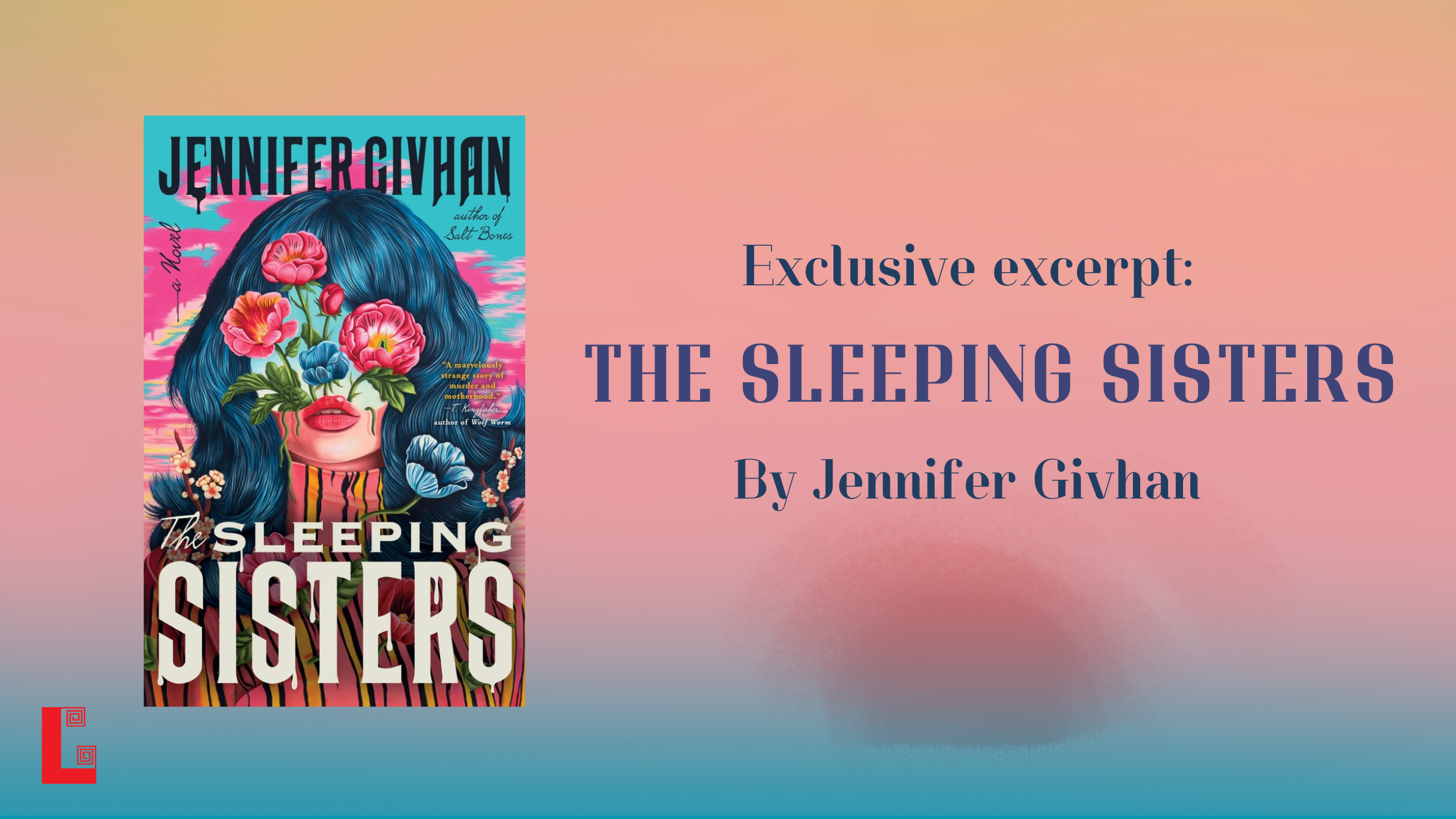
Latinx in Publishing is pleased to exclusively reveal an excerpt from The Sleeping Sisters by Jennifer Givhan (out on August 18, 2026) courtesy of Little, Brown and Company.
A mother's love is the oldest curse
Fortuna Miércoles has finally moved her family to a better neighborhood across the Rio Grande, desperate to outrun the curse that's stalked her bloodline since her greatest grandmother crossed the desert with a cactus thorn splitting her throat. But burying a family's violent legacy--or her own haunting secret--isn't so easy. Twenty years ago, girls and women vanished into the Albuquerque night, their bones later unearthed on the mesa. The so-called Reaper was never caught. Now, beneath the dormant volcanoes called the Sleeping Sisters, the killings have begun again, and they've called forth something in Fortuna that she has long fought to keep buried...
Detective Jeanette Palacio has spent decades promising justice to the ghosts of her murdered cousins--alongside the memory of the other women she couldn't avenge. When a new body turns up in Fortuna's backyard, both women are pulled into a dangerous, ancient plot. Are the Sleeping Sisters awakening--or has someone in Fortuna's family set a trap?
Inspired by true events, The Sleeping Sisters begins as a taut mystery shot through with myth and a Chicana-Indigenous reimagining of the legend of the headless woman--but by its cataclysmic end has spiraled into a fevered, feral hymn to motherhood and a mesmerizing portrait of trauma and the monstrous bargains we make to protect those we love.
Scroll on for the chance to read the prologue and chapter nine of The Sleeping Sisters.
Prologue
I’ve spent motherhood dreading this. The seep of the plastic tarp. The squelch of our chanclas slap-slapping against the slush in the desert behind the Sleeping Sisters, their cinder cones numb and
silent for millennia. I keep twisting my ankles on the jagged basalt, and the horror I thought I’d left on this frozen hill seventeen years ago rushes back.
“Mama?”
The voice that echoes is not my child as they are now, cold and rigid, but as I want them to be. Whole. Safe. Unmarred by my monstrosity.
“Shhh,” I snap, yanking my foot free and nearly toppling us both. “Dig faster.”
I claw at the slurry of dirty snow, desperate mother that I am, as he takes the shovel when my hands blister, or have they been his on the splintered handle all along? Under his hoodie, he’s drenched and glowering.
Have I been shielding his actions all this time? Is that the fracture, deep down?
He says nothing as the shovel head devours another clump of mud. Then another. Until it breaks its teeth against the rocks with a sharp clang and my memory unhinges, same as most things tenuously sewn above my shoulders.
Snowmelt puddles. The Sleeping Sister volcanoes on the mesa lie dormant. Unwatchful. That’s what happens when you fall asleep. You stop paying attention.
It’s not just owning a body I’ve been afraid of but raising children into full-fledged adults with bodies of their own. That want. And need.
When they’re young, it’s simpler. Their needs stack like blocks—spoon-feedings, plush animals, a finger to suck. A patch of grass in a cramped yard, their world confined to the netted playpen. But as they grow, so does my fear.
I blink my ice-fattened tears away and spit out granules of dirt and gravel onto the tarp, where the ground slurps at our feet, making obscene little popping noises. We’re just organisms in a glass box again, the world frozen and fogged around us. The terrarium cracked years ago no matter how I pretend it hasn’t. Maybe I am as delusional as that cop thinks I am. Or as monstrous. I imagine we’re stargazing. A meteor shower’s due in a night or two.
The seams at my neck pulse, precipitation gluing my hair to my face. The Sleeping Sisters huddle, their backs hunched to us, indifferent as ever. These bitches could sleep through the end of the world. And maybe that’s now. “Dig faster!”
The sludge, the stars, the swirls of dread. His hands on the shovel, off with my head.
Nine
The lore on headlessness is fascinating. Refreshing. A cool breeze at the neck.
When you were young, you wanted to hear the stories of the past. You didn’t understand their implications. To you and your brother, they were akin to magical happenings. Colorful folktales in faraway villages.
You two checked out a library book called In a Dark, Dark Room and Other Scary Stories, and you’re the one who said, “Look, Mama! Just like you!”
You pointed excitedly to a girl named Jenny with a puke-green ribbon lashing her neck in the inky illustration.
I replied, “They got it wrong, mijita.”
They stole our story. They penned us into a wives’ tale and dismissed us. Pinned us to the pages like moths. But it wasn’t the first time, nor would it be the last. Before “The Legend of Sleepy Hollow,” Washington Irving had cribbed our story from a fellow writer, only she’d been Westernized, made French. Her choker was black velvet.
“Perhaps there were headless women all over the world,” you wondered.
“Maybe so,” I agreed.
Your brother wanted to paw at my throat with his grubby paws.
When you were little, more than the Gothic tales of the writers you and your brother were named after, you most loved the stories of our ancestors, but as you grew older, you stopped believing they were real.
I didn’t want to instill you with such fear, you have to understand, mijita.
I would’ve rather told you fantasies about girls who grow up to become queens despite their mothers or stepmothers interfering. If there’s one thing I’ve learned from your abuela, whom I haven’t spoken to since I was a teenager when she almost killed me, it’s this: Mothers toughen you up. They teach you how to save yourself when their shield inevitably fails.
Have I ever told you how I wanted to be a writer? I fancied myself a Gothic horror aficionado. When you were an infant, I read you “The Tell-Tale Heart.” Not very baby friendly, I know, but I never got a
chance to major in literature or creative writing like I’d wanted in high school. I not so much dropped out as had to run to keep out of prison or a graveyard. So that put an end to all my literary aspirations. Being dead inside will do that to a mother.
In my senior class, I was ostracized, the girl with the lecherous, murderous father. I could’ve gone full Carrie on them but what would’ve been the point? We’re all locked in the stories we’ve created. I’m sorry, mija. I get so angry sometimes.
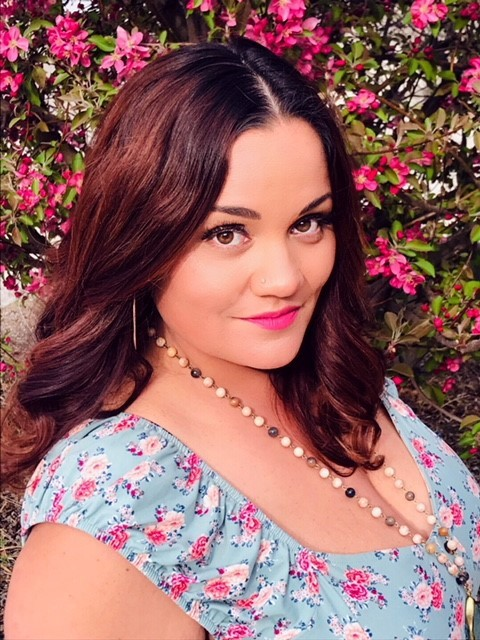
Jennifer Givhan is a Mexican American and Indigenous poet and novelist from the Southwestern desert and the recipient of poetry fellowships from the National Endowment for the Arts and PEN/Rosenthal Emerging Voices. She holds a Master’s degree from California State University Fullerton and a master’s in Fine Arts from Warren Wilson College. Givhan is the author of five full-length poetry collections and the novels River Woman, River Demon, Jubilee, Trinity Sight, and Salt Bones. She lives in Albuquerque, New Mexico with her family.