Best Books of 2022 According to Latinx In Publishing

2022 has been a wonderful year for Latine books. This year we asked the Latinx in Publishing board and our co-directors what books moved them, and that they would highly recommend. Here’s what they selected!

buy now

MISS QUINCES by Kat Fajardo

Kat Fajardo makes a funny, touching middle grade debut with this graphic novel. Sue just wants to spend her summer with her friends, but instead she gets dragged on a family trip to Honduras. She is not happy: she loves her abuela, but there’s NO INTERNET, she has to spend a bunch of time with her older sister who calls her “boring and weird,” and all her mom seems to care about this summer is throwing Sue a quinceañera celebration she doesn’t want. But the trip ends up opening Sue’s eyes to things she never saw before—and her family eventually sees the value in celebrating Sue the way she WANTS to be celebrated. Fajardo is a truly excellent visual storyteller, and there’s so much in this story to relate to and be moved by for anyone who’s felt like a misfit in their family.

– Sophia Jimenez, Writers Mentorship Co-Director 

 
buy now

How Not To Drown in a Glass of Water by Angie Cruz

An absolutely captivating story about Cara Romero, a Dominican woman in her 50s in the Bronx, who through the act of seeking employment lays bear her entire life. This is a book that makes me forget I am reading. I see Cara sitting right in front of me, addressing me, in all her messy, irresistible humanity. Inspiring both deep belly laughs and streaming tears, Angie's Cruz's latest novel is for all those seeking an unpretentious and yet profound read.

–Toni Kirkpatrick, Board Secretary 

 
buy now

HIGH-RISK HOMOSEXUAL by Edgar Gomez

 Diagnosed with a serious case of being a 'high-risk homosexual," Edgar writes a memoir exploring the interacting layers of identity as a gay, Latinx man and the love it takes to be proud to be who you are in a culture intent on erasing you. We follow Edgar from childhood within the confines of machismo, opening from his uncle's cockfighting ring in Nicaragua where he is taken to become “a man,” to the queer spaces he navigates in Florida and other parts of the U.S. as he comes of age. Smart, funny, and with sharp fashion sense, it's hard to imagine Edgar as kind of shy... but that's where his vulnerability and thoughtfulness shine as a writer. One thing about Edgar in this book, he's going to be honest about the mess. A strong-hearted debut!

–Andrea Morales, Communications Co-Director 

 
buy now

A WOMAN OF ENDURANCE by Dahlma Llanos-Figueroa

This is a powerful story about Pola, who is taken from her home in Africa and enslaved in Puerto Rico, where she is used for breeding purposes. Pola has a hard life, but she endures. She fights to survive and then she fights to reclaim her humanity in the face of brutal circumstances. It's a hard read at the beginning but at the end we have a woman with the strength and courage to love herself and embrace the community around her.  Very emotional read but so worth it.

–Maria Ferrer, Board Member, Interim Treasurer & Events Director 

 
buy now

Frizzy by Claribel Ortega, illustrated by Rose Bousamra

 Marlene is dealing with a mother and a society that tells her that her natural hair isn’t desirable or acceptable. And all everyone in her family can talk about is how people look, which can get pretty exhausting. Luckily she has her awesome Tía Ruby (we all need a Tía Ruby!) to provide some rooftop gardening time and much-needed perspective. 

My ten-year-old and I read this graphic novel together, and I’m so glad that she and other young readers have this powerful book that will encourage them to question the adults in their lives, to name and recognize anti-Blackness when they see it, and to speak up for themselves when necessary. And for adult readers, this books acts as a gentle reminder that it’s *our* job to unlearn and heal from the messages we may have internalized when we were young. Beautifully illustrated and highly recommended.

–Nancy Mercado, Board Member, Fellowships Co-Director 

 
buy now

WILDS OF THE UNITED STATES: The Animals' Survival Field Guide by Alexander Vidal 

This beautiful and informative guidebook tells the stories of the wild creatures that live from Alaska to Florida and explores each unique region in the United States. Alexander Vidal visited more than 30 national parks, forests, grasslands, mountains and oceans researching this book. Readers will feel as if they are along for the hike meeting their animal neighbors to see up-close the skills that the animals use to survive. The author also includes a Land Acknowledgement honoring Indigenous communities. Packed with information and lushly illustrated, this book is a one-of-a-kind gift for any family passionate about nature, animals, travel and outdoor adventure.

–Stefanie Sanchez Von Borstel, Board Member, Fellowships Co-Director 

 
buy now

Mariana and Her Familia Written by Mónica Mancillas and illustrated by Erika Meza

 This heartwarming picture book follows Mariana on her first trip to visit family in Mexico, where she becomes overwhelmed by new faces and Spanish phrases she doesn’t understand only to soon learn there's no language barrier when it comes to love. Mariana and Her Familia is perfect for any reader who, like me, has a big, warm extended family to visit over the holidays, but not so much the fluency to keep up with all the chisme. It'll have you quickly remembering that there are many ways to treasure time with loved ones.

– Carolina Ortiz, Writers Mentorship Co-Director 

 
buy now

YOU SOUND LIKE A WHITE GIRL by Julissa Arce

I love a good nonfiction book, especially one that I can find some common ground with. It's also important for me to read books by authors from all backgrounds and paths of life. I enjoy strong, unapologetic voices who believe deeply in their subject matter. I appreciated the blunt and honest way in which Arce approached this book and her sincerity and vulnerability in discussing her personal life; her journey to break her assimilation into our complex society. I love the detailed accounts that were provided of historical events. I also found that there were many ideas left for discussion, contemplation and analysis. Books that strive to make a difference in the lives of others and society are a must for me. 

– Tiffany Gonzalez, Communications Co-Director 


Book Review and Q & A: River Woman, River Demon by Jennifer Givhan

Book Review: River Woman, River Demon by Jennifer Givhan | October 4, 2022

From the very beginning, River Woman, River Demon had this reviewer guessing and investigating — I mean, a psychological thriller based in New Mexico with a strong Chicana protagonist that practices curanderisma*? Yes, please. Written by award-winning Mexican-American and Indigenous author, Jennifer Givhan, this book was fulfilling all my antsy-continued-NYC-COVID-days-read-needs. 

Givhan’s protagonist, Eva Santos Moon, particularly strikes a chord. There is a relatability through her internal struggle of authentically knowing her craft (the brujería and her artistry, if we should even think of those separately,) her culture, and, of course, herself — we’re all just doing our best, am I right? 

As I’m introduced into Moon’s world, I become, dare I say it, bewitched. I’m incredibly charmed by Eva’s bold and magickal disposition, hers x’s, and the bond she has with the spiritual, especially through her partner, a local university professor and well-respected root worker.

Once settled in and ready for the ride, Givhan throws the reader through a reckoning which, completely devastates the family’s New Mexico ranch — Eva’s husband has been accused of murder … and on their actual property. 

Buy now

What follows next and also precedes, is a suspenseful investigation into not only her husband’s potential crimes, but into Eva’s. Take it from the title, fam, the river plays a major character in this book, with ghosts from the past utilizing its energy to connect with Eva. But why? Who’s to blame? Who…what is the river demon? 

A suspenseful page turner, River Woman, River Demon is perfect for those who find themselves questioning their agency in uncertain times and it’s especially for those looking for a little bit of extra spiritual support and cultural empowerment. Personally, I felt that reaching this book’s cathartic conclusion was my own much-needed literary limpia*. 

Note: This review is based on an early uncorrected proof.

*curanderisma: Based in Latin America and the United States, curanderisma blends religious beliefs, faith, and prayer with the use of herbs, massage, and other traditional methods of healing.

*limpa: spiritual cleansing ritual in Mexican and Mexican-American culture.


Author Q & A

Chelsea Villareal (CV): As someone with Rio Grande Valley ancestral roots, I loved digging into your Southwestern magickal mystery! What made you want to write a brujerîa thriller?

Jennifer Givhan (JG): In many ways, this book is a protection spell written from experiences where my family’s semblance of safety became torn and encroached upon by an interwoven spider’s web of systemic oppression and violence, personal hauntings and trauma, and choices we made as a result. As folk magick practitioners, Eva and Jericho in RIVER WOMAN, RIVER DEMON are tested individually and together, although my focus for this particular book remains closely on Eva, a mother whose self-worth and mettle are tested and whose unreliable narration we glean in order to, I hope, better empathize with imperfect and thereby endearingly human mothers. 

Brujería has too long been seen as the source of darkness, brujas, witches, and misunderstood women as the malevolent forces to be fought. In subverting the mainstream narrative for the point of view of a family and mother of color, I wanted to turn the tables and show how the brujería, the magick and spirituality and worldview that it stems from, is neither good nor evil in and of itself, that shadow plays an integral part in finding the light, and that women of color (and in Eva’s case, a Latina and indigenous woman) can kick some serious ass and right major wrongs. But I also didn’t shy away from the horror and trauma, nor gloss over the necessary shadow work and duende integral to finding one’s truths and using it to fight injustice in all its forms. 

CV: Did you do a lot of research for the book? Or was curanderisma something that you grew up with? 

JG: My familial practices formed the bulwark of the brujería in the novel, but I adore researching and reading nonfiction to inform and uplift my own work, so I've certainly been informed by research as well. Most helpful to my understanding of hoodoo, beyond my husband’s practice, were the books by Stephanie Rose Bird. She’s written several illuminating volumes I highly recommend, including 365 Days of Hoodoo, which offers one piece of advice/aspect of a ritual or fixing per day, leading toward a larger body of knowledge and praxis that follow the seasons, and I found this book incredibly buoying, like she was with me each day, guiding me on my journey. Witchery by Juliet Diaz is another that I pored through again and again, early on my own bruja’s path, and even now, I’ll return to it for the wisdom of my bruja hermana I found in its pages.

I think, at this point in our (insert enraging adjective of your liking) year 2022, we’re all feeling a bit disconnected from our magickal roots. Any advice to readers looking for empowerment? What would you say readers can gain from knowing your strong Chicana protagonist, Eva?

JG: One of the most integral aspects of brujería and witchcraft to own my life is the cyclical nature of all things, spirit and material. The lessons we need to learn will keep coming to us again and again, and they’re not always something to fear or distrust. In the beginning of RIVER WOMAN, RIVER DEMON, Eva is terrified by the idea that “Nothing comes we haven’t conjured or called one way or another.” But this phrase transforms and takes on a completely new meaning by the novel’s end. Still, she’s learning lessons; still, she is calling things to herself from her past. And yet, because of her willingness to travel through the dark night of the soul, la noche oscura del alma, and do battle with the duende in the underbelly, she is changed utterly, and so she’s more able to recognize the lessons and their teachers coming to her; with this recognition comes understanding and respect. We leave Eva not at the end of her journey of brujería, but, really, at the beginning. We believe that she is now solidly on the path she was always meant to traverse, and that’s what we can carry with ourselves back into our lives. The journey doesn’t get easier, but we recognize, finally, that we are stronger. Brujería isn't about calling something external but recognizing our inner strength that has already built a stronghold within and surrounding us.  


Jennifer Givhan, a National Endowment for the Arts and PEN/Rosenthal Emerging Voices fellow, is a Chicana and indigenous novelist, poet, and transformational coach. She is the author of Jubilee, which received an honorable mention for the 2021 Rudolfo Anaya Best Latino-Focused Fiction Book Award, and Trinity Sight, winner of the 2020 Southwest Book Award. She has also published four full-length poetry collections and her honors include the Frost Place Latinx Scholarship and the Joy Harjo Poetry Prize. She raises her children in New Mexico.

Chelsea P. Villareal (she/her) is a Queer Mexican American media strategist from PDX. She holds a BUPA in Political Science & Media Studies from Portland State University and recently completed her Master’s in Communication & Education at Columbia University. Her passions focus on participatory cultures, civic imagination, speculative storytelling, and intersectional Latinx identity representation — across all media. She proudly works on the marketing team at Schell Games and at We Need Diverse Books as their Senior Program & Partnerships Manager. 

#SalaSundays with Talisa Ramos

Talisa Ramos hosted our Instagram on December 4th for our weekly #SalaSundays series. Below are a few questions that we asked Talisa.

Latinx In Publishing (LxP): What do you do?

Talisa Ramos (TR): Most recently I’ve been an associate manager selling part of the list published by Penguin Young Readers into Barnes & Noble. Shortly though, I will be transitioning into a marketing role where I can help strategize on campaigns that will help get our books on the radars of the most folks possible.

LxP: How did you get started?

TR: My story might be an outlier, in the sense that now that I have experience in this industry, I know how difficult it can be to get your foot in the door of publishing and how folks often will intern and/or do publishing courses in order to gain experience & contacts that will help them get started. I lucked out in that I had complete beginner’s mind when I decided to try and get a publishing job, which was about 6 months after graduating from my Bachelor’s degree. I applied to a Sales Assistant role that was on PRH’s entry level jobs page, and got called for an interview. I will say that I worked hard on my cover letter, but otherwise am grateful that the timing aligned and know it’s not so often such a clear cut entry point.

LxP: What do you wish you knew before getting into the industry?

TR: I wish I knew that as much as it’s wonderful to have a focus on curiosity and learning when you’re getting started, and to learn from other people’s expertise/experience, that does not have to mean that you’re not also eligible to contribute your ideas and perspectives. In many ways, it’s wonderful to start out and look at things from the perspective of someone who was most recently an engaged book lover/consumer themselves, who’s willing to consider new avenues for exploration and in general is not so tethered to existing processes or philosophies because you’re looking at everything from a fresh perspective. Especially as folks from marginalized and/or underrepresented communities, it is especially important to feel that you have a right to share because you likely have a deeper understand about what might resonate/reach folks who aren’t traditionally focused on in book campaigns or considered “target consumers.”

LxP: What book are you currently working on or reading?

I’m excited for Doodles from the Boogie Down, a Middle Grade graphic novel coming from Kokila next April.

Talisa Ramos is a born and raised 2nd generation New Yorker/Nuyorican. A graduate of Barnard College, she earned her degree in American Studies & currently works at Penguin Random House. A proud Brooklynite, she lives in Fort Greene with her dog Jax, where she can be found marathon reading or marathon watching compelling stories of all genres.

December 2022 Latinx Releases

On Sale December 1, 2022

buy now

Still Standing: The Ti Kais of Dominica by Adom Philogene-Heron

Still Standing tells the story of the traditional wooden homes (known as ti kais) of Dominica in the eastern Caribbean. This gorgeously illustrated book pays tribute to these humble buildings that have withstood hurricanes and earthquakes since the end of slavery. Often ignored and now in danger from development, this unique vernacular architecture is is an important part of Dominica's rich creole culture.

On Sale December 6, 2022

buy now

MELTDOWN: Discover Earth’s Irreplaceable Glaciers and Learn What You Can Do to Save Them by Anita Sanchez

Packed with information, grounded in the latest science, with lively writing and illustrations throughout (including graphs, charts, infographics, photographs, and full-page art), Meltdown gives readers an eye-opening overview of glaciers and how important they are: There are over 100,000 glaciers covering 10% of earth's landmass, that hold almost three-quarters of the planet's fresh water, and act as protective shields to cool the atmosphere and combat climate change. We learn how glaciers were formed (some over two million years ago), how they move and carve the planet's landscape, and how scientists study them (the bluer the ice, the older it is). We learn the secrets of earth's climate history hidden deep in a glacier's core--and discover how climate change is causing glaciers to melt at unprecedented rates, putting the health of the planet in jeopardy.

But we are not left without hope. The final chapter offers positive steps readers can take to become climate activists, reduce their carbon footprint, and save the glaciers.

On sale December 13, 2022

buy now

The Musician by Heloisa Prieto

Thomas has felt alone most of his life, his only companions the musical creatures that he can see but others can't. Wealth, talent, charisma, good looks, and fame conceal the eighteen-year-old's lingering pain following the loss of his parents. His music is his bridge to the world, and his favorite form of connection.

A chance meeting with a group of strangers leads to the eventual revelation of his magical musical secret-and there are those who wish to steal it from him. Soon the wealthy Dr. Alonso and his beguiling daughter, Dora, trick Thomas into joining a cult from which he may never escape.

When Marlui, a young Guarani shaman, senses the danger surrounding Thomas, she vows to protect him from Dr. Alonso at all costs. Can she rescue him, or will Thomas succumb to the advances of Dora and lose not only his heart but the powers that bring him joy?


ON SALE DECEMBER 27, 2022

buy now

That Dangerous Energy by Aya de León

Marrying a billionaire will fulfill this struggling artist's dreams--and enable her to make a difference. But exposing the truth will put all her convictions on one dangerous line . . . Coming from a troubled youth, Morgan Faraday grabs every opportunity to up-level her life. So she definitely plans to keep oil company heir Sebastian Reid interested . . . all the way to the altar. He's brilliant, supportive, and is turning his billion-dollar company green to make up for his ancestors' exploitation. With him, Morgan can have love, money, and the power to make the world better. And securing her future is far more important than the attractive environmental activist she suddenly has unexpected feelings for . . . But once Morgan gets a glimpse of Sebastian's secret allies and confidential emails, she's stunned to find he's only talking a good game. His company is responsible for several ecological disasters, and a chance encounter makes it clear to Morgan the lengths he'll go to stay on top. To gather enough evidence to expose him, Morgan will have to rely on her quick wits and new friends to stay one step ahead of a corporate conspiracy. But as the danger comes closer, will Morgan put herself first and run--or face down the risk, even at her cost of her life?

Interview with Rudy Ruiz author of Valley of Shadows

On belhalf of Latinx In Publishing, I had the opportunity to ask Rudy Ruiz a few questions about Valley of Shadows.

Chelsea Villareal (CV): As someone who also has Rio Grande Valley ancestral roots, I was thrilled to pick up Valley of Shadows! What made you want to write this genre-bending thriller?

Rudy Ruiz (RR): In my previous novel, The Resurrection of Fulgencio Ramirez, I applied magical realism to border life in a story that wove together love, history and a family curse. I wanted to explore the idea of that family curse further as well as delve more deeply into the conflicted and dark history of the border region and the multigenerational traumas that have haunted many families in the area, dating back to when the Rio Grande River was declared the border at the end of the US-Mexico War. Valley of Shadows provided me the opportunity to pursue that line of thinking while bringing elements of the Western, horror and mystery genres to a tale that touches on the historical atrocities and social injustices of the mid- to late-1800's. Unfortunately, many of those same issues of racism and discrimination against Latinos, Indigenous Peoples, African Americans and Asian Americans are still very real and pressing, which I feel makes the novel very relevant to readers today.

CV: One of the book’s stronger themes centers on borders, whether they be magickal, geographical, or metaphorical (or a decent mix) — could you tell us more about how you went about interweving all these nuances within the story?

RR: Borders are a motif in my writing. I was born and raised on the border, and my writing always takes me back there. They say you can take a person out of the border but you can't take the border out of a person. That saying definitely applies to me. Growing up, the border was an invisible line my family and I crossed every day. Because of that, I see borders as porous membranes through which people, animals, goods, services, and the environment must continuously traverse and transmit back and forth. In my work, I explore the idea of porous borders with respect to place, culture, language, time, and even life and death. Magical realism lends itself to that exploration in a very fluid and natural manner which also resonates culturally. When it comes to borders I see bridges instead of walls. I see beginnings instead of endings. I see an opportunity for people to come together and build something constructively and collaboratively. I try to reflect that world view and that vision for life through my characters and the situations and challenges they encounter and overcome within my stories.

CV: Tell us more about Solitario, your protagonist (anti-hero?). He exemplifies another key theme of your book; loneliness — how did you go about developing such a character?

RR: In Solitario, I yearned to create an imperfect person that could feel real and flawed, but also be someone worthy of rooting for, someone readers would empathize with and care for throughout the story. He's had a hard life and he's lost everyone he has loved. Whether it's because of his family curse, sheer bad luck or poorly made decisions, he has ended up a very lonely person, isolated and afraid to engage with the world. I created Solitario during the pandemic, and the heightened isolation of that time period inspired me. I think many of us felt isolated during the pandemic in a way we never had before in our lives. That sense of isolation helped me conjure up how Solitario might have felt in his self-imposed exile. Coming out of isolation has also been emotionally difficult for many people after the pandemic. That painful process, which involves taking big risks, informed my approach to how Solitario copes with opening his heart up to others. Likewise, I didn't make it through the pandemic alone. I doubt most people did. My family helped me get through it. For Solitario, the same holds true. Through the gift of "found family," vital friendships and alliances, Solitario is able to journey back into the world and fulfill his purpose as a member of his community. The dichotomous combinations of vulnerability and toughness, fear and courage, loneliness and yearning, resentment and moral compass render Solitario Cisneros a compelling character.

CV: How much historical research did you have to do for the book? There was an impressive amount of historical nods in the storyline.

RR: Thank you! I conducted extensive historical research to bring authenticity to the historical context of the novel. It started with genealogical research that my father began years back before he passed away. Through the research he did, I came to learn more about the history of the border and the families that originally settled it in the late 1700's. Our own family was one of those, the Cisneros. Through that history, I learned about the family's original Spanish land grant, Caja Pinta, which is actually a historical fact within the storyline and also the fictional Solitario's birthplace. In wanting to branch out from La Frontera, the mythical border town I created in The Resurrection of Fulgencio Ramirez, I imagined that Solitario would have wanted to flee the curse afflicting the men of his family. This leads him to join the Rurales, a paramilitary force that was part of the Mexican government and played a key role in fighting the French Imperialist invasion. And, eventually, Solitario ends up in Chihuahua and West Texas, in another mythical border town I created called Olvido. In fleshing out the details of those phases of Solitario's life, I learned a great deal about the history of Mexico and of West Texas, including the historic tragedy of the Porvenir Massacre of 1918 and the role of the Mescalero Apache people in defining the region. It was very eye-opening to do the historical research because I did not learn any of these facts in classrooms growing up. Unfortunately, the way most history text books have been written the perspectives of Mexican-Americans and Indigenous People have been largely omitted. This is one reason I'm excited to share this novel with the public. I see Valley of Shadows as a contribution towards reclaiming our rightful place in American history, redefining the Western genre, and adapting Southern Gothic to the Southwest and border regions.

CV: Any advice to readers looking to tap into their ancestral empowerment to break down oppressive borders, just like the ones you explored in your book? A lot of our community at LatinxinPub are also writers — any words of advice to those looking to take inspiration from their family’s stories and incorporate them into a book, much like you did with Valley of Shadows?

RR: Listen to your abuelitos and abuelitas, your mamá and papá. They harbor a world of wisdom and knowledge. Their stories – whether heartbreaking or funny, spiritual or painfully real, nostalgic or aspirational – are filled with a special magic that is embedded in our culture and DNA. When we retell those stories, use them as jumping out points, flesh them out with historical context, we can find ourselves inspired, either to overcome personal and professional obstacles, advocate for social justice, or engage in new ways with our own families and communities. When we understand our histories and we can process the traumas that might have been passed down through the generations, we can better face these issues and also begin to heal as individuals and families. And, if you're a writer or an artist, you might find yourself with a life-changing project on your hands that is both enlightening and empowering.

Valley of Shadows brilliantly blends magical realism, western, and horror genres into a page-turning Rio Grande Valley epic — a haunting frontera tale, perfect for folks looking for their next thrilling read.

—Chelsea Villareal

buy now

Rudy Ruiz is a writer of literary fiction, essays and political commentary. His earliest works were published at Harvard, where he studied literature and creative writing, and was awarded a Ford Foundation grant to support his writing endeavors.

Seven for the Revolution was Ruiz’s fiction debut. The collection of short stories won four International Latino Book Awards.

Ruiz’s short fiction has appeared in literary journals including BorderSenses, The Ninth Letter, New Texas, and the Notre Dame Review. In 2017, Rudy Ruiz was awarded the Gulf Coast Prize in Fiction. In 2020, Ruiz was a finalist for both the Texas Institute of Letters’ Best Short Story Award as well as the Texas Observer’s annual Short Story Contest.

In 2020, Blackstone Publishing released Ruiz’s novel, The Resurrection of Fulgencio Ramirez. The novel received critical acclaim and was named one of the “Top 10 Best First Novels of 2020” by the American Library Association’s Booklist. The Southern Review of Books stated: “Ruiz’s prose is buoyant and immersive…Its effusive descriptions are reminiscent of Laura Esquivel.” The novel was longlisted for the Reading the West Award and a Finalist for the Western Writers of America Silver Spur Award for Best Contemporary Novel. It also was awarded two Gold Medals at the International Latino Book Awards, including the Rudolfo Anaya Prize for Best Latino Focused Fiction and Best Audio Book.

Follow Rudy Ruiz online: Website: RudyRuiz.com | Twitter: @Rudy_Ruiz_7

Chelsea P. Villareal (she/her) is a Queer Mexican American media strategist from PDX. She holds a BUPA in Political Science & Media Studies from Portland State University and recently completed her Master’s in Communication & Education at Columbia University. Her passions focus on participatory cultures, civic imagination, speculative storytelling, and intersectional Latinx identity representation — across all media. She proudly works on the marketing team at Schell Games and at We Need Diverse Books as their Senior Program & Partnerships Manager.

Review: Solito by Javier Zamora

The promise of family is what sustains a then-nine-year-old Javier Zamora on his journey to La USA from a village in El Salvador, that same promise is what gives fruition to his memoir Solito. Despite its title, Solito is just one story out of the hundreds of thousands of children from Central America that make the journey to the United States without family, but whose first-hand accounts go largely unheard of. Commonly referred to as “unaccompanied minors” by media coverage and political pundits, the poet challenges this very notion and forces you to move past the legalistic term through impeccable detail, rendering the grueling 3,000-mile journey in the most visceral of emotions. 

The book begins with Zamora yearning to finally go on this “trip” he has been hearing about, one his father and mother made years ago due to the ongoing effects of the Salvadoran Civil War and one he must make to reunite with them. What was expected to take two short weeks turns into nine weeks of life-altering events, a coming-of-age for Javier. He faces the wide open sea for the first time, experiences different cultures that he must take on in order to keep moving north, goes on tiresome desert treks, and encounters border patrol. His detailed descriptions and observations are both honest and zany, the roots of a young writer begin to show: his personification and naming of cacti, his meticulous reporting of dates and events, and his attention to the smells and textures associated with his time in the desert are all notable. 

Buy

Solito, while a book immediately about migration, is an ode to the family he found in the strangers that accompanied him, Chino, Patricia, and Carla. They become his family for the sake of travel, but the tenderness and care they show was not all what Javier expects. He extends this

sentiment for other strangers, those who are left behind and even to those whose character is questionable. This journey, as expected, is not without obstacle, but surprisingly, not without love. As they move closer and closer to the U.S., an impending sense of loss infuses the last few chapters. 

And we are not given relief. We are not to revel in a nine year old boy’s reunion with his parents. Perhaps, it is just as well—this book is not for us, but for Zamora’s nine year old self, for the solitos and solitas to fill in the blanks with their own stories. Whether it was an awkward hug, leaping into family members’ arms, we are not privy to it, nor should we expect it. 

Solito is not just a story of the desire to reunite with family, but of how to reunite with his family he must say goodbye to his beloved home in El Salvador, his extended family, and must eventually part ways from Chino, Patricia, and Carla─his surrogate family. It is a must-read, letting us in on the reality of migration. It’s a story that has no desire to contribute to the countless books and articles of trauma-laden migration narratives, the “prequel” to the myth of the American Dream.


Javier Zamora was born in El Salvador in 1990. His father fled the country when he was one, and his mother when he was about to turn five. Both parents’ migrations were caused by the U.S.-funded Salvadoran Civil War. When he was nine Javier migrated through Guatemala, Mexico, and the Sonoran Desert. His debut poetry collection, Unaccompanied, explores the impact of the war and immigration on his family. Zamora has been a Stegner Fellow at Stanford and a Radcliffe Fellow at Harvard and holds fellowships from the National Endowment for the Arts and the Poetry Foundation.

Allison Argueta-Claros is an undergraduate student at New York University. She is studying an individualized major centered on immigration narratives through policy, literature, and journalism with a minor in Creative writing. She spends her time writing, reading, and making playlists.

#SalaSundays with Rose Heredia

Rose Heredia hosted our Instagram on November 13th for our weekly #SalaSundays series. Below are a few questions that we asked Rose.

Latinx in Pub (LxP): What do you do?

Rose Heredia (RH): I'm currently an Editorial Fellow with Latinx in Publishing, non-related to publishing, I currently work in HR for a non-profit law firm.

LxP: How did you get started?

RH: I became a fellow in June of 2022 but began my journey as a literary agent intern in 1999.

LxP: What do you wish you knew before getting into the industry?

RH: I wish there would have been more accessible resources and opportunities to network with folks more than now. Social media wasn't a huge thing in the late nineties!

LxP: What book are you currently working on or reading?

RH: I'm reading Fruit of the Drunken Tree by Ingrid Rojas Contreras.


Rose Heredia is Afro-Dominican from Williamsburg, Brooklyn, New York. She has an MFA in Creative Writing from the University of San Francisco and Post-Baccalaureate Certificate Program in Writing. She is a VONA and Las Dos Brujas alumna. She is a Culture writer and editor for Epifania Magazine, Assistant Non-fiction Editor for VIDA Review and recently edited The Washington Heights Memoir Project forthcoming in January 2023 published by the Dominican Writers Association.
November 2022 Latinx Releases

on sale november 1, 2022

buy now

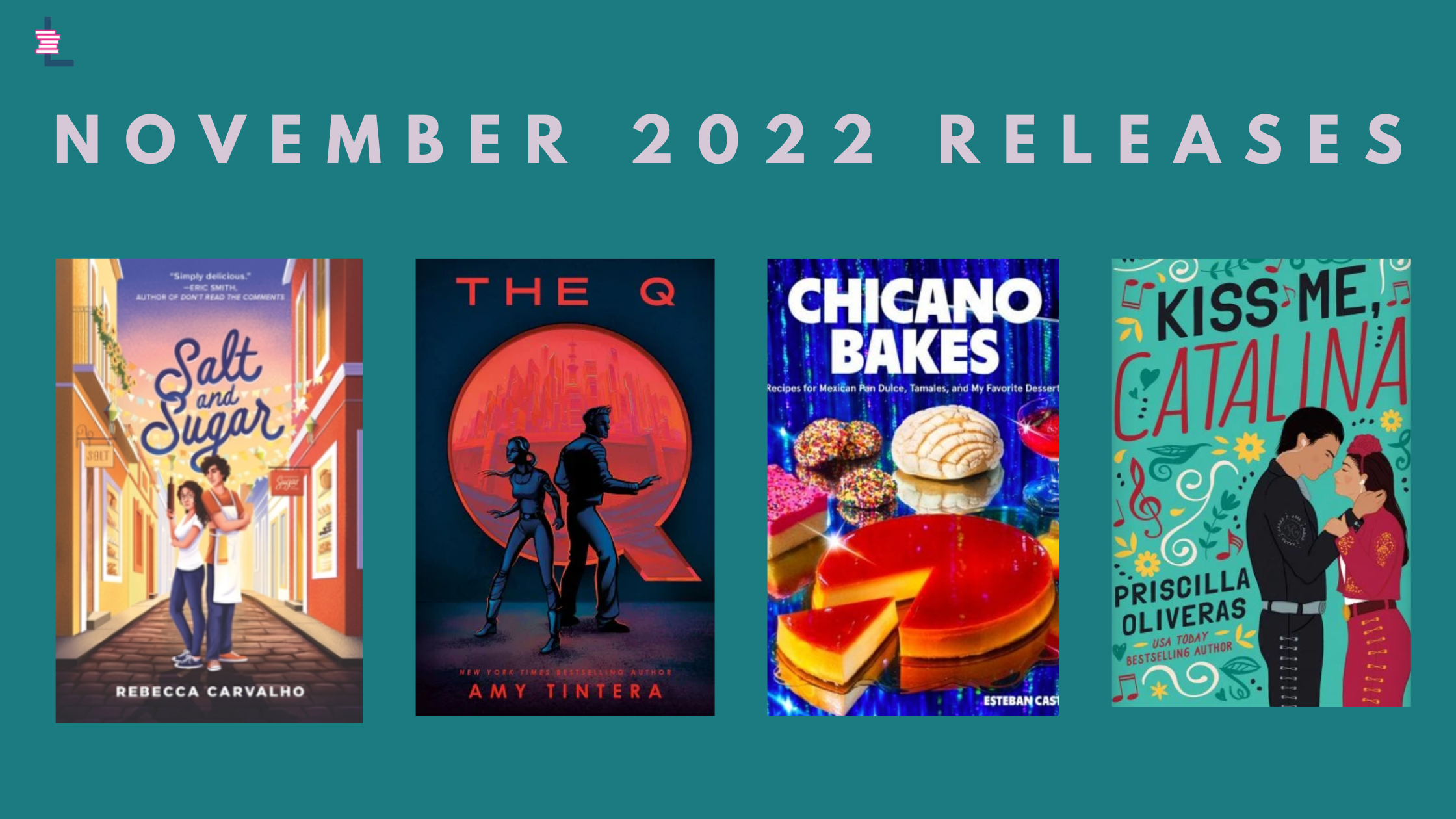
Salt and Sugar by Rebecca Carvalho | Young Adult

Trust neither thin-bottomed frying pans nor Molinas.
Lari Ramires has always known this to be true. In Olinda, Brazil, her family's bakery, Salt, has been at war with the Molinas' bakery across the street, Sugar, for generations. But Lari's world turns upside down when her beloved grandmother passes away. On top of that, a big supermarket chain has moved to town, forcing many of the small businesses to close.
Determined to protect her home, Lari does the unthinkable--she works together with Pedro Molina to save both of their bakeries. Lari realizes she might not know Pedro as well as she thought--and she maybe even likes what she learns--but the question remains: Can a Ramires and a Molina truly trust one another?

 
buy now

Kiss Me Catalina by Priscilla Oliveras| Romance

Ambitious San Antonio singer Catalina "Cat" Capuleta gets the chance of a lifetime when she joins superstar heartthrob and fellow mariachi Patricio Galán on his seven-week concert tour. Demanding and arrogant, Patricio challenges Cat on every level, as an artist and as a woman. But headstrong Cat is determined to be his match. No matter how seductive Patricio's baritone voice, Cat's eyes are only on the prize: success and making her familia proud.

No woman gets under Patricio's skin like Cat. Her talent mesmerizes. Her passion is thrilling. And her drive, stemming from an old unhealed family wound, exposes a vulnerability he secretly recognizes in himself.

When the duo hits the road, the sparks don't just fly--they detonate. Stage by stage, as each reckons with the past--and with each other's quick-fire personalities--they bring crowds to their feet, and Cat's long-held dreams come true. Will their road romance go up in flames? Or could making music together kindle the most rapturous love song of their lives?

 
buy now

This Is Our Place by Vitor Martins, translated by Larissa Helena | Young Adult

As Ana celebrates the new millennium, she is shocked to learn that she must leave behind her childhood home, her hometown, and -- hardest of all -- her girlfriend for a new life in Rio de Janeiro.

Ten years later, Greg is sent to live with his aunt -- who runs a video rental store from her garage and owns a dog named Keanu Reeves -- as his parents work out their not-so-secret divorce.

And ten years after that, Beto must put his dreams of becoming a photographer on hold as the Covid-19 pandemic arrives in Brazil, forcing him to live with his overprotective mother and overachieving sister.

Set in and narrated by the same house, Number 8 Sunflower Street, and in three different decades -- 2000, 2010, and 2020 respectively -- This Is Our Place is a novel about queer teens dealing with sudden life changes, family conflict, and first loves, proving that while generations change, we will always be connected to each other.

but now

Chingona: Owning Your Inner Badass for Healing and Justice by Alma Zaragoza-Petty

In Chingona, Mexican American activist, scholar, and podcast host Alma Zaragoza-Petty helps us claim our inner chingona, a Spanish term for ""badass woman."" For all the brown women the world has tried to conquer, badassery can be an asset, especially when we face personal and collective trauma. Working for change while preserving her spirit, a chingona repurposes her pain for the good of the world. She may even learn that she belongs to a long line of chingonas who came before her--unruly women who used their persevering energy to survive and thrive.

As a first-generation Mexican American, Zaragoza-Petty narrates in riveting terms her own childhood, split between the rain-soaked beauty of her grandparents' home in Acapulco and a harsh new life as an immigrant family in Los Angeles. She describes the chingona spirit she began to claim within herself and leads us toward the courage required to speak up and speak out against oppressive systems. As we begin to own who we are as chingonas, we go back to where our memories lead, insist on telling our own stories, and see our scars as proof of healing.

Liberating ourselves from the bondage of the patriarchy, white supremacy, and colonization that exists in our own bodies, we begin to see our way toward a more joyful future. This work won't be easy, Zaragoza-Petty reminds us. Imagining a just and healed world from the inside out will take dialing in to our chingona spirit. But by unleashing our inner badass, we join the righteous fight for dignity and justice for all.

buy now

Chicano Bakes: Recipes for Mexican Pan Dulce, Tamales, and My Favorite Desserts by Esteban Castillo | Cookbook

With Chicano Eats: Recipes from My Mexican American Kitchen, Esteban Castillo offered his readers a look into his life, family, and culture. For Esteban, sharing stories and recipes from his childhood was a cathartic experience, and seeing so many people make and enjoy the foods that meant so much to him growing up was a dream come true.

Now, this rising food star mines his culinary roots once more. Chicano Bakes features many of the mouthwatering delights Esteban enjoyed throughout his childhood, from Pan Dulce Mexicano (Mexican Sweet Bread), Postres (Desserts), and Pasteles (Cakes) to Antojitos (Bites) and Bebidas (Drinks). Here are easy-to-make recipes sure to become fan favorites.

Esteban encourages everyone--no matter their level of experience in the kitchen--to get baking, especially those in his community who may be intimidated or discouraged by other cookbooks that overlook their cultural tastes and traditions. Illustrated with more than 100 bright and inviting photographs that capture the flavor of the Chicano Eats brand, Chicano Bakes is an homage to a culture that has existed in the U.S. for generations--and whose influence continues to grow.

on sale november 8, 2022

buy now

The Q by Amy Tintera | Middle Grade

Seventeen-year-old Maisie Rojas has spent her entire life in the Q--a post-pandemic quarantine zone that was once Austin, Texas. Born and raised behind the high-security walls that sealed their fate, she's now a trusted lieutenant for one of the territory's controlling families.

Lennon Pierce, the charismatic son of a US presidential candidate, has just been kidnapped by his father's enemies and dropped out of a plane into the Q with nothing but a parachute strapped to his back. Lennon is given a temporary antidote to the disease and crucial intel for his father, but Maisie must get him out of the zone within forty-eight hours--or he will be permanently infected and forced to remain.

With unrest brewing both inside and outside the Q, reaching the exit is a daunting and dangerous task. But if Maisie and Lennon fail, it could mean disaster for the entire quarantine zone and its inhabitants--and could cost Lennon his life.

Strap in for breakneck action and compelling characters in this timely, nonstop thriller.

on sale november 22, 2022

buy now

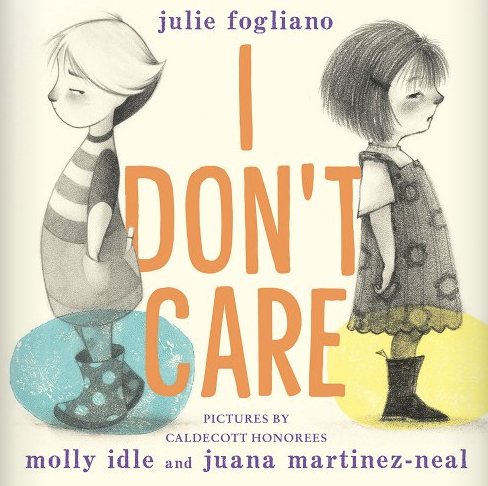
I Don't Care by Julie Fogliano | Picture Book

I really don't care what you think of my hair
Or my eyes or my toes or my nose
I really don't care what you think of my boots
Or if you don't like my clothes. . .
Mostly I care that you're you and I'm me
And I care that we're us and we're we.

This rhythmic, rhyming text by award-winning author Julie Fogliano celebrates the similarities and differences between two unlikely best friends.

buy now

Catalina Incognito: Skateboard Star by Jennifer Torres| Middle Grade

The Valle Grande Games skateboarding competition is coming up, and the winner gets a brand-new board. That means, if Coco wins, Catalina might finally get a skateboard of her own--Coco's old one. The trouble is, normally fearless Coco has lost her skateboarding mojo at the worst possible time. Cat discovers that Coco has outgrown her lucky flannel, and without it, she's lost her confidence.

This could be Catalina's big chance. She can enter the competition herself. If she wears the lucky flannel--and uses the magic sewing kit to make some special alterations--the judges might see a skating star and award her the new board. Which sister will come out on top?

on sale november 29, 2022

buy now

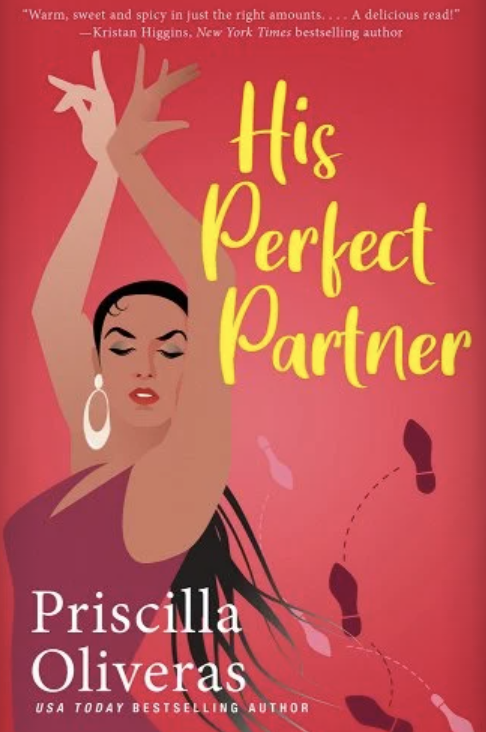
His Perfect Partner: A Feel-Good Multicultural Romance by Priscilla Oliveras

Ad executive Tomás Garcia shouldn't even be thinking about his daughter's alluring dance teacher, Yazmine Fernandez. Burned by his divorce, he's laser-focused on his career--and giving his young daughter, Maria, the secure home she deserves. But Yazmine's generous, caring spirit is sparking a desire Tomás can't resist--and doesn't want to let go . . .

For Yaz, good-looking workaholics like Tomás simply can't be part of her life ever again. She owes it to herself to get back her confidence and fulfill the dreams her papá could not. She's glad to spend time with Maria--and she's sure that she and Tomás can keep their attraction under control when there's so much at stake. But each unexpected intimacy, each self-revelation, makes the fire between them grow hotter with every step--and every risk to their hearts . . .

 
buy now

The Boy from Mexico: An Immigration Story of Bravery and Determination by Edward Dennis |

Based on a true story, Luz channels his inner bravery to come to America. All alone, he must face natural disasters and sacrifice everything to have a better life.

Learn bravery and independence with Luz. Luz stays strong on his journey by thinking of his family. His tale is truly a powerful representation of immigration and determination. His real-life adventure across the border will ignite hope in the hearts of every child that reads this short Spanish story.

Enjoy vivid illustrations on every page. In this easy book to read, get lost in the beautiful Mexican mountains and valleys on Luz's journey. Your thoughts will become Luz's and his dreams will become your dreams. You will be cheering him on every step of the way in this short Spanish story.

#SalaSundays with Alexandra Aceves

Alexandra Aceves hosted our Instagram on November 6th for our weekly #SalaSundays series. Below are a few questions that we asked Alexandra.

Latinx in Pub (LxP): What do you do?

Alexandra Aceves (AA): I'm an Associate Editor at Holiday House Publishing. My job has two distinct sets of responsibilities: on one hand, I'm acquiring and editing new books (primarily MG and YA novels and graphic novels) for the Holiday House list. On the other, I'm overseeing the expansion of Holiday House's Spanish language publishing program. This entails looking through our backlist for books that have translation potential, coordinating with translators on new Spanish editions, steering our upcoming Spanish books through the in-house routing process, researching Spanish publishing industry standards and best practices, and scouting submissions for potential new frontlist titles that we could also publish in Spanish.

LxP: How did you get started?

AA: I had a kind of circuitous path to my publishing career. I did a traditional publishing internship many years ago now and had such a terrible experience that I decided not to pursue publishing and went into academia instead. Eventually, I realized that my heart just wasn't in academia and that kidlit publishing was where I really wanted to be, so I pivoted back. My breakout job in the industry was as an editorial assistant at Junior Library Guild, where I learned the industry from the school and library perspective. And then about a year ago I left JLG for Holiday House--my first anniversary is coming up on November 15th!

LxP: What do you wish you knew before getting into the industry?

AA: I was really not prepared for how much negotiating goes down--across the industry in general, and in editorial specifically. Like, negotiating a book deal with an agent, negotiating over a P&L at an acquisition meeting...I am not a natural haggler and have been kind of dismayed to learn what a big part of my job it is! It's definitely the only aspect of what I do that I don't enjoy, and I always dread having to go through that process to acquire a manuscript I love and want for my list. But passion for and belief in the manuscript gets me through every time. Plus, everyone I've worked with is so nice, and everyone knows it's just business; the issue is really just me being in my head about it.

LxP: What book are you currently working on or reading?

AA: I would love to talk about the books I'm working on right now because I'm incredibly excited about them, but I can't because none of my acquisitions have been announced yet! I did just wrap up editing the Spanish edition of Crystal Maldonado's No Filter and Other Lies, which was such a fun project. And my current non-work read is The Town of Babylon by Alejandro Varela, which is devastatingly lovely.


Alexandra Aceves is a Latine writer and editor originally from Mexico City and currently based in Brooklyn. She works as an associate editor at Holiday House, where she oversees the expansion of the Holiday House Spanish language publishing program while also acquiring YA and middle grade fiction and elementary STEM nonfiction for Holiday House's English language list. Alex is looking for fresh-feeling contemporary realism, soft-genre fiction that draws from non-European traditions, and research-grounded historical fiction with an unusual setting. She is passionate about supporting marginalized creators and is actively seeking stories by and about people typically excluded from representation in children’s literature, particularly stories from the LGBTQ+ and Latine communities. Alex was the 2015 Honor winner of Lee & Low's New Visions Award for previously unpublished YA fiction writers whose work centers characters from marginalized communities; her debut novel is forthcoming from Lee & Low's Tu Books imprint.

Review: Pilar Ramirez and the Escape from Zafa by Julian Randall

Pilar Ramirez and the Escape from Zafa is about Pilar Ramirez, a spunky 12-year-old Dominicana from Chicago. She is an aspiring documentary filmmaker working on a project about the disappearances under a Dominican dictator. Specifically, to uncover the mysterious disappearance of her mother’s cousin, Natasha. When she hears of a professor who studies these disappearances, Pilar wastes no time. Upon entering the office and rummaging through files, she falls into a blank page and enters the magical island of Zafa. Pilar teams up with ciguapas and galipotes in their fight against the Dominican boogeyman, El Cuco, to free those who are trapped in prison – including Natasha.

Buy now

Found Family is a very common fantasy trope and Randall perfectly executes it. With Pilar and the citizens of Zafa all teaming up for this life-changing event that is causing them such grief, it ultimately brings them together like a family. Pilar and one of the ciguapas begin to form a sisterly bond while she views the galipotes as matriarchs. Even an elusive and legendary Bruja grows a bond with Pilar, especially with their sarcastic quips. The people of Zafa all welcome the 12-year-old to visit them and view her as one of their own merely hours and days of knowing her. Their shared experience bonded them together and, ultimately, gave them the power to defeat El Cuco. Well, that and if you take in Pilar’s badass fighting and secret witch powers into account.

Loss and grief are prominent themes throughout the novel. Something I took from the novel was that even if you’re human or a magical or mythical creature, these emotions can take quite a toll on you. However, everyone’s hope that they will emerge victorious in this war is just as strong. Pilar has experienced loss in many forms and every adult and child in Zafa has had to pay a heavy price in the form of losing someone they love or their own livelihood. They have more in common than they think and this similarity is what bands them together to become stronger and come out victorious in this vicious war.

Randall intended for the novel to be written . . . with the intention to feel represented by a voice and to further uncover what it means to be Dominican.

While reading about Pilar swinging through vines and learning how to harness her witch powers, it was heartwarming to hear how Randall intended for the novel to be written. It was with the intention to feel represented by a voice and to further uncover what it means to be Dominican. Also, Pilar’s story doesn’t end here as Pilar Ramirez and the Curse of San Zenon will be released in February 2023. 


Julian Randall is a Living Queer Black poet from Chicago. Since receiving his MFA in poetry from Ole Miss, Julian’s essays have been featured in The Atlantic, Vibe Magazine, Los Angeles Review of Books, and many more. His writings have led him to receive multiple recognitions and fellowships from Cave Canem, CantoMundo, Callaloo, BOAAT, and the Watering Hole. Refuse: Poems was his 2018 debut poetry book back; and as of March 2022, he released a debut children’s novel. Randall has shown time and time again that his recent works are only scratching the surface of his dynamic novels that are to come.

Melissa Gonzalez (she/her) is a UCLA graduate with a major in American Literature & Culture and a minor in Chicana/o & Central American Studies. She loves boba, horror movies, and reading. You can spot her in the fiction, horror/mystery/thriller, and young adult sections of bookstores. Though she is short, she feels as tall as her TBR pile. You can find Melissa on her book Instagram: @floralchapters