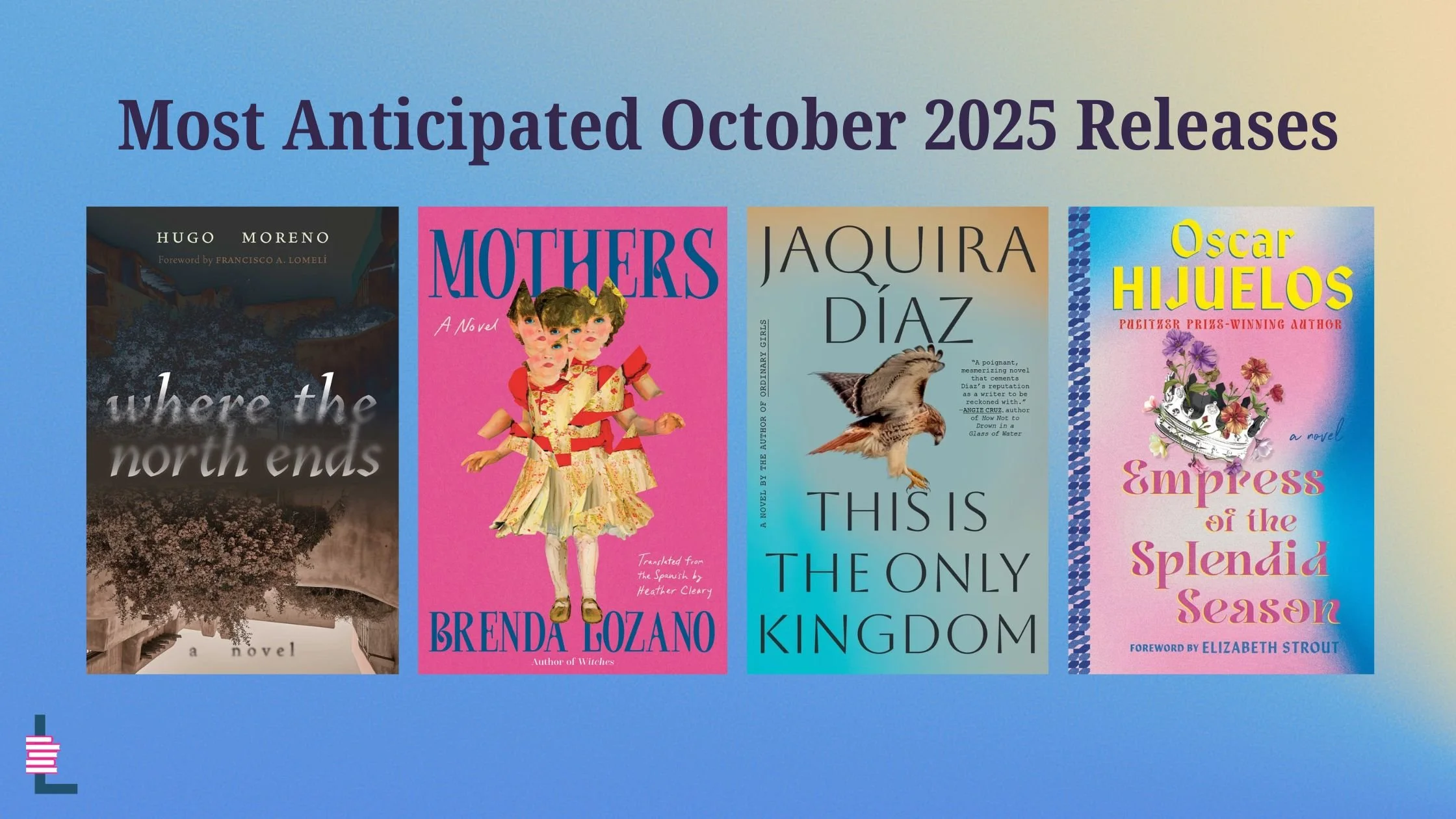
To start, This Is the Only Kingdom grips readers with its prologue. It is May 1993, and a cane cutter somewhere in Puerto Rico discovers a gruesome scene in the golden cañaverales: a dead body.
The painful beginning of Jaquira Díaz’s debut novel is a marker of what’s to come. This Is the Only Kingdom (out now from Algonquin Books) is an immersive and affecting origin story about one Puerto Rican family through the years. Set between a working-class barrio on the island and Miami, the book largely follows Maricarmen and her daughter Nena as they struggle through a new reality in the aftermath of a murder. Díaz treats time in her epic novel with delicate hands and a keen eye for the many societal challenges that face Puerto Ricans and members of the LGBTQ+ community. We meet Maricarmen as a 16-year-old who falls for Rey, a local musician who is in and out of juvie. Soon, she finds herself trying to make a home for both of them, Rey’s younger brother, Tito, and their baby girl, Nenuska (known as Nena). Then one day, that home Maricarmen has been so desperately trying to keep together crumbles before her.
More than a decade later, Nena is now a teenager herself. She is unlike the other girls at her high school, and unlike what others expect a girl from el Caserío to be like. She is also exploring her sexual identity, all while finding her place in society. After a horrific discovery, mother and daughter are plunged into another grief, this time having to navigate a murder investigation.
Much like she did in her Whiting Award-winning memoir, Ordinary Girls, Díaz’s writing in This Is the Only Kingdom reaches inside readers’ hearts and does not let go. The novel is beautiful and heartbreaking in its scope, with Díaz not turning away at all but leaning towards themes of love, loss, rejection and resilience. The author spoke with Latinx in Publishing about the inspiration behind her debut novel, the book’s many themes, and much more.
This interview has been edited for clarity and brevity.
“I wanted to tell a story about flawed characters who were failing each other and failing themselves. Who were failing, but kept trying to show up for each other. The way that this story unfolded was just two characters who fell deeply in love, but who were very, very flawed.”
Amaris Castillo: Congratulations on This Is the Only Kingdom. This is your debut novel. What inspired this story?
Jaquira Díaz (JD): I have been thinking about this story since I was a kid growing up in el Caserío. This was a story that, at first, my dad passed down to me. Not the whole story, just bits and pieces about Rey. I’ve been thinking about Rey’s story for a really long time, and I always thought that I would write this as a nonfiction book. That I would write the whole history, the trial, everything that happened after his death.
Then as I started writing, I realized that Rey’s story started changing. It became this fictional story. I realized I couldn’t write a nonfiction book, because the characters were demanding something else. So I created this fictional family in this fictional place that is kind of like el Caserío Padre Rivera, but not quite. The story just took on a life of its own. But the inspiration for it was definitely the story that my father told me years ago, that I then started hearing from other people in el Caserío. My own family remembered the real-life version of Rey, who is not like this character at all. The story that’s in the book is fictional. There are some similarities, but everything is actually invented.
AC: Your novel is a family origin story and follows Maricarmen and Rey, who is known as Rey el Cantante. Their love story is complicated, and there are times when that love is called into question. What can you tell us about their love story and its nuances?
JD: That’s such a great question. I 100% believe in love. But I don’t believe in love the way that it’s usually portrayed in love stories; how everybody’s perfect and how people live happily ever after. I wanted to tell a story about flawed characters who were failing each other and failing themselves. Who were failing, but kept trying to show up for each other. The way that this story unfolded was just two characters who fell deeply in love, but who were very, very flawed. In the end, everything was not perfect, because people are human. And humans are not perfect. I wanted to tell a story that was deeply flawed, and that was much more representative of the way that we live and love.
AC: Your book touches on many themes – poverty, racism, drug addiction, family estrangement, LGTBQ isolation and acceptance. You weave all these themes in an unflinching manner. What was it like to weave all these themes through your characters?
JD: I’m thinking about two things. First, the mother-daughter relationship was really hard for me. I was right in the last two chapters of the book when my mom died. Even though I had been preparing myself for years, because she was sick for a very long time, it was sudden and unexpected. And I was right in the middle of writing the last chapter, which has to do with the mother-daughter relationship. I really struggled trying to put that chapter together, and trying to write a mother-daughter relationship that felt real. That still felt human and flawed, but real, and where there was redemption and understanding. I kept having to pause and think, This is not my mom. It’s not a memoir. This is a fictional family. So it was really hard to keep trying to finish it, and then stopping and starting and stopping and starting. That was the most difficult chapter to get through.
There were also the chapters that are set in the pharmacy in Miami Beach. Those were actually based on my real life. I worked in two different pharmacies when I was a teenager, and it was right when Miami became one of the epicenters of the AIDS epidemic. I had a close friend who died of AIDS, and he was very young. So to put myself back in that mindset, I definitely thought of him. He’s not the character (in the book), but I definitely thought of my time with him and how close we were, the things we did together, how we talked to each other, and how we talked around things.
I thought about that time when I was writing that chapter, and I thought about family estrangement for queer people back then. It was 1995, ‘96, ‘97. It was a very different time. I had friends and I had a community because Miami Beach was a place that became like a gay city. Everybody went there to find community when they were diagnosed with HIV, so it was a community that was simultaneously growing but also disappearing. It was always changing. It was always kind of in a liminal state, where I would meet people and then they would disappear three months later. And I wouldn’t hear from them again. We all knew what happened. I was 16, 17 years old, experiencing this. I was closeted, and watching people in my community struggling with their whole lives, without their families. That was one of the most difficult things to write about.
“I tend to think of writing and music as a kind of conversation. When I’m writing, I write to music and so I’m always thinking about that rhythm.”
AC: Your chapters are titled after salsa songs. I recognized some like “El Cantante” by Héctor Lavoe and “El Gran Varón.” In your acknowledgements you write that you’re indebted to musicians. As a Puerto Rican, what does the salsa genre mean to you, and how has that significance changed as you grew into a writer?
JD: I grew up in a musical family, in a musical house. My dad was friends with a lot of musicians. He was the guy who drove them to their gigs, which is where I got part of that story. We always had a lot of books and a lot of records in our house. My dad is the kind of guy who loves to tell stories. He would put on something by Cheo Feliciano, and he would tell me the story. Or he would put Ismael Rivera, and he would tell me the story. These songs always came with stories about the singer, the writers, but also the story that’s in the song. One of the things that I loved about the golden era of salsa, is that all the songs had stories attached. There was always either a love story, or a story of Pedro Navaja. It was like a plot. For me, it was like another way of storytelling and another way of imagining myself as a writer — somebody who would write songs. I studied music as a kid and I always thought that I would make music. Now I just write about it.
The way that this connects me to Puerto Rican culture is that every single one of these songs — even the ones that were written by Rubén Blades, who is Panamanian, to me feel very, very Puerto Rican. It has something to do with the lyrics, with actual words and refranes that some of these songs have, the way that the language is kind of connected to the body. When you think about bomba y plena and when you think about musicians, it’s not just the drums that are a part of the performance. It’s also the dancer’s body that is actually talking to the drums. So it’s like a conversation. I tend to think of writing and music as a kind of conversation. When I’m writing, I write to music and so I’m always thinking about that rhythm. I have a soundtrack that I listened to while I was writing this book, and all of the songs in the liner notes were part of this soundtrack. When I was writing the chapter, “El Cantante,” I was listening to “El Cantante.” When I was writing “El Ratón,” I was listening to “El Ratón.” When I was writing “Juanito Alimaña,” I was listening to “Juanito Alimaña.” It was so important for me to get something in the chapter that feels like the song. I’m not just using this title, but this is actually an embodiment of the song.
AC: El Caserío Padre Rivera is very much its own character in the novel. It’s where your main characters live out their lives. You dedicate the book to “mi gente del Caserío Padre Rivera.” Obviously you fictionalized this caserío for the novel in some ways. What do think people misunderstand most about el Caserío, or life in el Caserío?
JD: There’s much. El Caserío today is very different from el Caserío when I was growing up there. I remember going to school after leaving el Caserío for the first time and going to a different school. When the kids found out that I was from el Caserío, everybody was scared of me. I didn’t understand it, because we all just were a community. Us kids, we were always outside playing. Everybody looked out for us. It was a real place where you could feel the community. Everybody had birthday parties, and birthday parties were block parties. The whole community showed up. When somebody gave birth — people gave birth at home — the whole community showed up.
Looking back, I have never, ever in my life felt the kind of sense of community that I felt when I lived there. And that’s one thing that people, I think, have no idea about. Yes, there were other things happening. Yes, there were drug dealers. Yes, there was crime. Yes, there were police showing up all the time. There were people showing up killed. All of these things did happen, but what I remember is that it was where I became a storyteller.
AC: What do you hope readers take away from This Is the Only Kingdom?
JD: I definitely wrote this thinking about my community and thinking about us from a place of love, and thinking about how we show up and how we love to tell stories. Storytelling is such a big part of our culture, including storytelling through music, like salsa music. So I would like for them to take that away. That yes, the novel is its own story, it’s also connected to something that, for me, feels really, really important, which is the ways that we tell stories and use music to tell stories in our culture. That is really important.

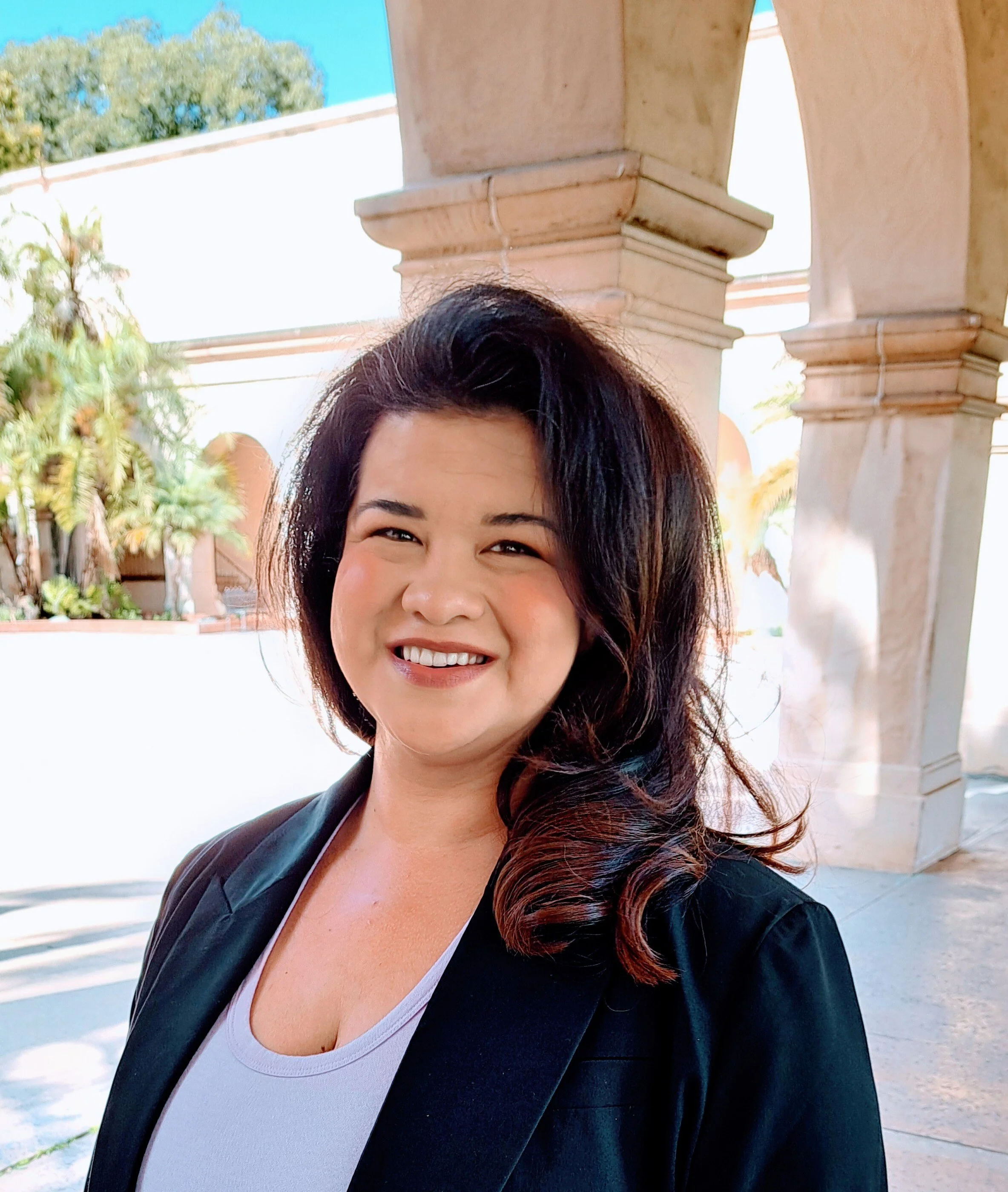
Born in Puerto Rico, Jaquira Díaz was raised between Humacao, Fajardo, and Miami Beach. She is the author of Ordinary Girls: A Memoir, winner of a Whiting Award, a Florida Book Awards Gold Medal, a Lambda Literary Awards finalist, an American Booksellers Association Indies Introduce Selection, a Barnes & Noble Discover Great New Writers Selection, an Indie Next Pick, a Library Reads pick, and finalist for the B&N Discover Prize.
The recipient of the Jeanne Córdova Prize for Lesbian/Queer Nonfiction, the Alonzo Davis Fellowship from VCCA, two Pushcart Prizes, an Elizabeth George Foundation grant, and fellowships from MacDowell, the Kenyon Review, Bread Loaf, Sewanee, the Wisconsin Institute for Creative Writing, and the Black Mountain Institute at UNLV, Díaz has written for The Atlantic, The Guardian, Time Magazine, T: The New York Times Style Magazine, Condé Nast Traveler, and The Fader, and her stories, poems, and essays have been anthologized in The Best American Essays, The Breakbeat Poets Vol. 4: LatiNext, Best American Experimental Writing, and The Pushcart Prize anthology. In 2022, she held the Mina Hohenberg Darden Chair in Creative Writing at Old Dominion University’s MFA program and a Pabst Endowed Chair for Master Writers at the Atlantic Center for the Arts. She lives in New York and teaches at Columbia University.
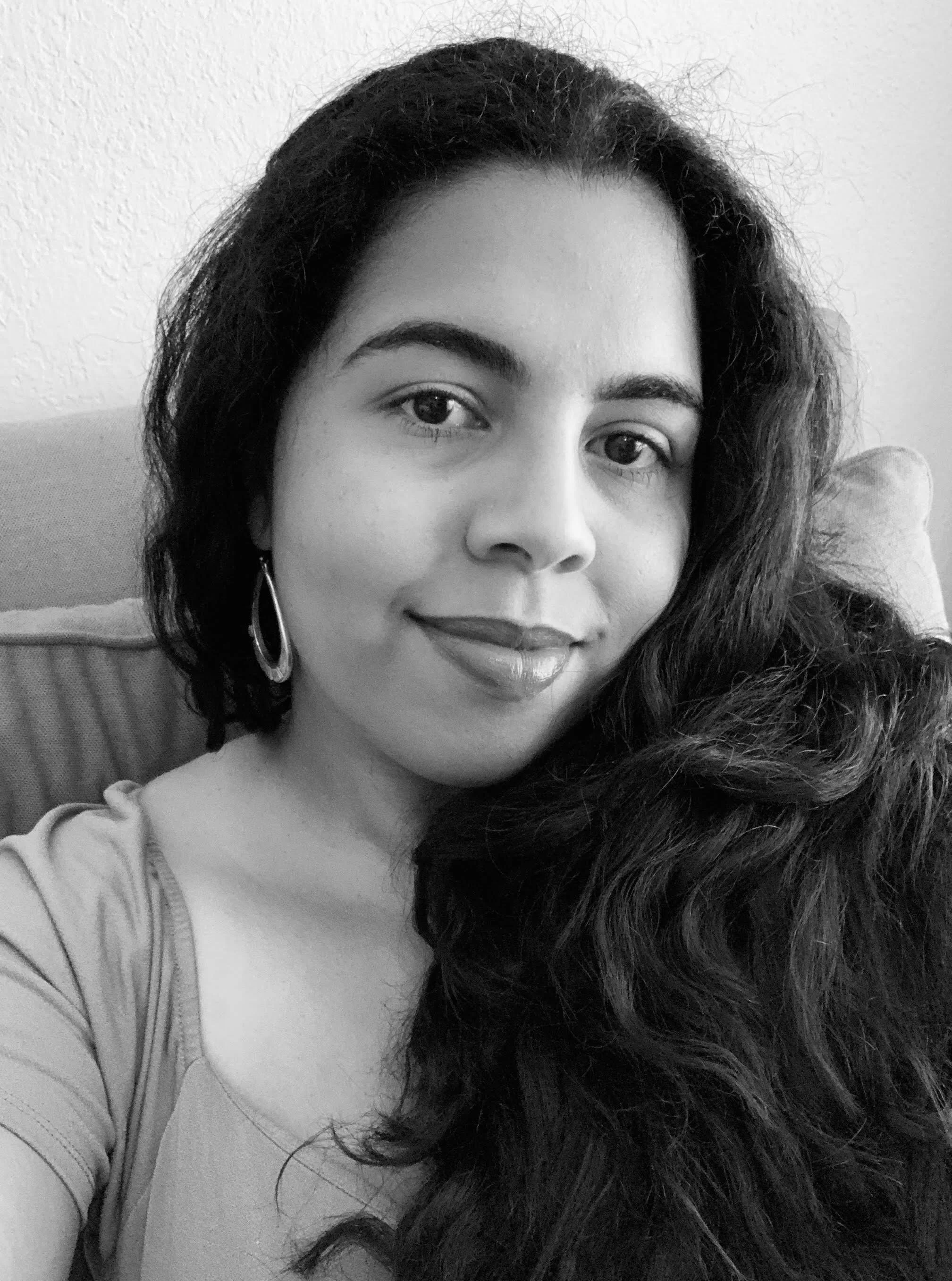
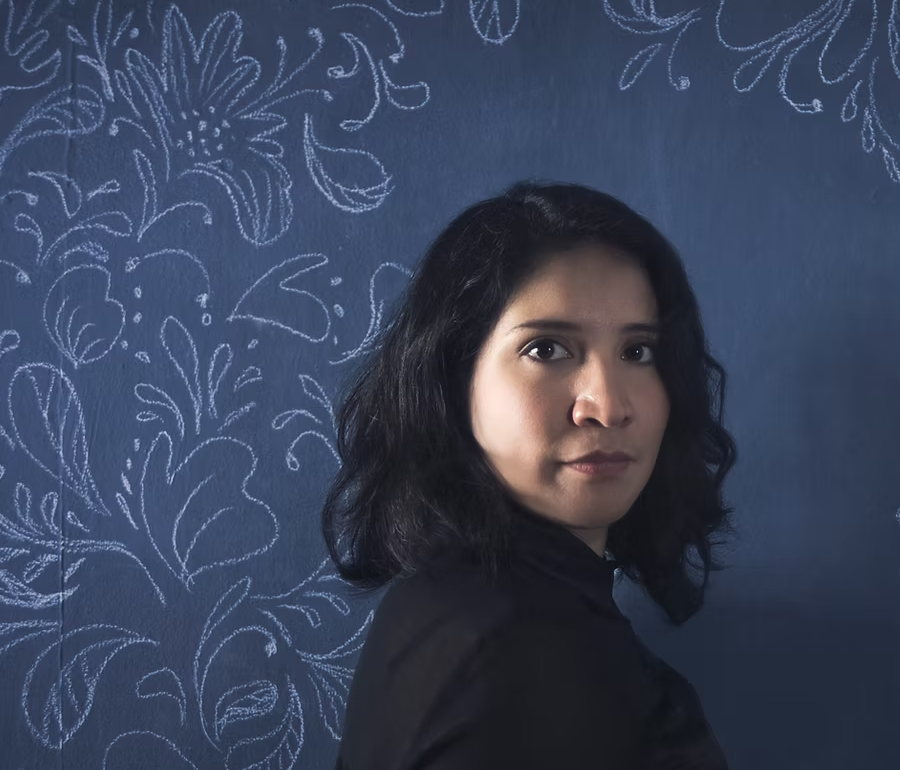
Amaris Castillo is an award-winning journalist, writer, and the creator of Bodega Stories, a series featuring real stories from the corner store. Her debut book, Bodega Stories, will be published in Fall 2026 from the University Press of Florida. Her writing has appeared in La Galería Magazine, Aster(ix) Journal, Spanglish Voces, PALABRITAS, Dominican Moms Be Like… (part of the Dominican Writers Association’s #DWACuenticos chapbook series), and most recently Quislaona: A Dominican Fantasy Anthology and Sana, Sana: Latinx Pain and Radical Visions for Healing and Justice. Her short story, “El Don,” was a prize finalist for the 2022 Elizabeth Nunez Caribbean-American Writers’ Prize by the Brooklyn Caribbean Literary Festival. She is a proud member of Latinx in Publishing’s Writers Mentorship Class of 2023 and lives in Florida with her family.