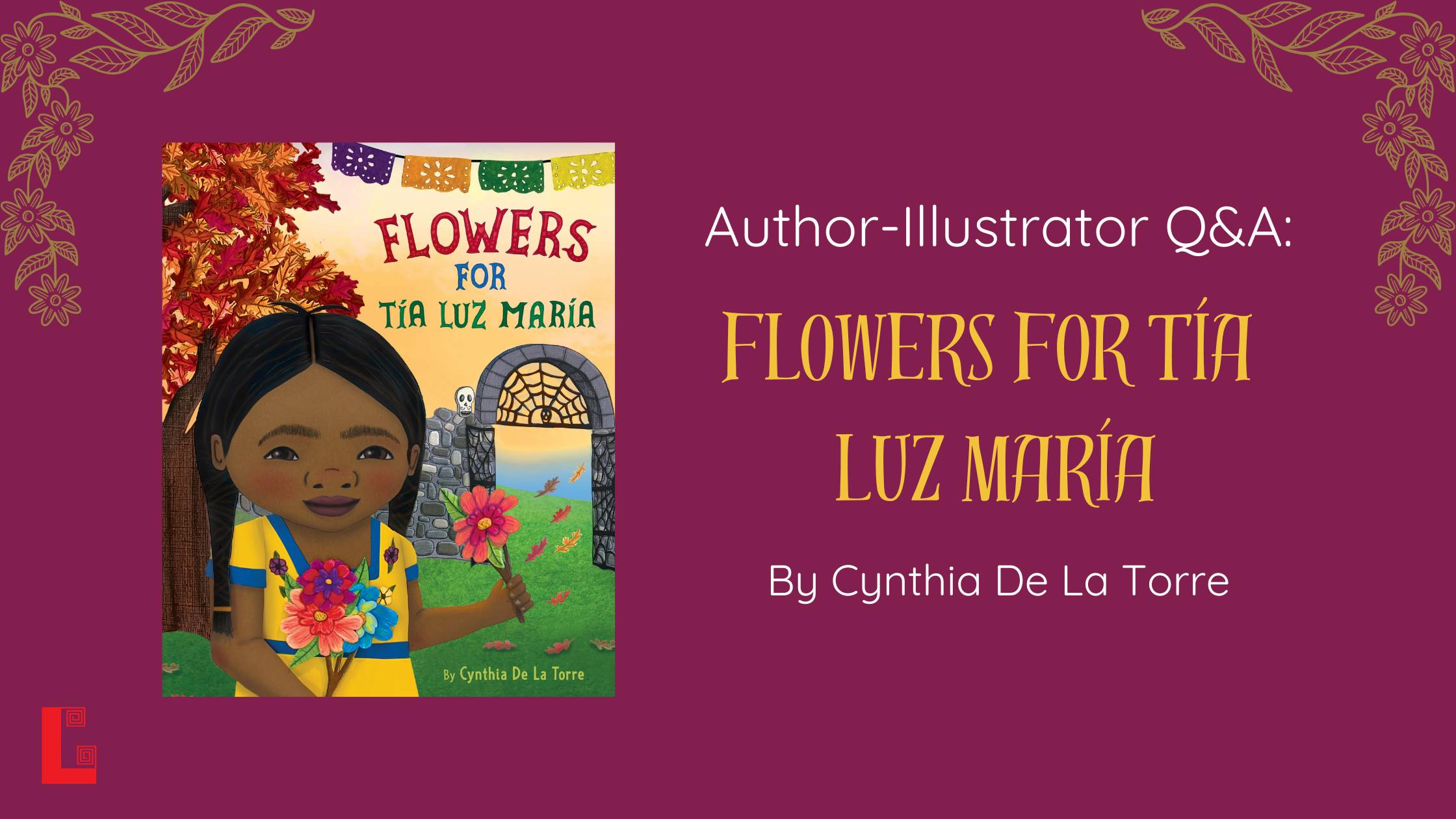
In Flowers for Tía Luz María, we meet a young girl named Galina. The tearful young girl watches from a window as her Tía Luz María is laid to rest in the cemetery. Galina is afraid. She has never had anyone close to her pass away. Alone with her parrot, Cantinflas, she asks what will happen to her aunt. She wonders aloud if Tía Luz María will turn into a scary calavera. She then shudders at the thought.
Galina tries to push her sadness out of sight, placing items that remind her of her aunt high up on a closet shelf. But the next day, something strange happens. The radio switches to another station and plays a song that Tía Luz María used to love. And later, a box of her aunt’s belongings falls off the shelf. The memories begin to flood Galina. Warm, beautiful memories she shared with her aunt.
Out July 21 from Quill Tree Books, Flowers for Tía Luz María by debut author-illustrator Cynthia De La Torre is a tender exploration of bereavement and how one child comes to terms with her own experience in grief. It’s also about the realization that there is space for joy while mourning the loss of a loved one. “We can still remember our loved ones even after they’ve passed on, even if it’s sad and there are so many unknowns,” De La Torre told us.
De La Torre spoke with Latinx in Publishing about overcoming one’s fear, her gorgeous cut paper art, and more.
This interview has been edited for clarity and brevity.
Amaris Castillo: Congratulations on Flowers for Tía Luz María. I understand this book was inspired by Día de los Muertos. Growing up, what was your relationship to the holiday?
Cynthia De La Torre: It was definitely inspired by Día de Muertos. I am Mexican American. Both my parents were born in Mexico, and they came here to the United States when they were both around 10 years old. They always taught us so much about our culture, and to feel pride for it. But we actually never really celebrated Día de Muertos; I didn’t learn about it till I was a bit older. And I loved it. I thought it was such a beautiful tradition. It’s a wonderful way to honor and remember our loved ones who have passed away. Once I got married and had kids, that’s when I started celebrating it and putting out ofrendas for our loved ones. It was such a beautiful way for my kids to get to know relatives who had passed away and who they never got to meet. But, in a way, they feel like they know them from those stories that we share with them every year when we put up the ofrenda.
This year we’re going to honor our cat who recently passed away. Our kids were heartbroken. We had him for 12 years, but it did bring solace to them in thinking, We’re going to remember him and honor him in that way as well. October 27 is actually the day where you honor your pets for Día de Muertos.
“I wanted kids and adults to know that, even if someone passes away, you’re still allowed to remember them in a joyful way.”
AC: When we meet Galina, she appears terrified. She thinks her aunt, who just passed away, will turn into a calavera. There is this fear that Galina seems to have about what happens next. As you wrote this book, what message were you hoping to send by positioning a child's fear around death in this way?
CD: When I was writing it, I didn’t realize that I was very much like Galina, because I didn’t have anyone close to me pass away until I was maybe a freshman or a sophomore. My uncle passed away when he was 32. It was really unexpected. I remember going to the viewing and not wanting to look at the body, because I was so terrified that he was going to look different. I remember being afraid that that image would supersede any other image I had of him. So it was very similar, but I just didn’t realize it till afterwards.
When family gathers after the funeral, there’s food and there’s music. In many ways, it’s very joyful, similar to the Día de Muertos, where it’s more of a celebration of the person. There are stories being told, and there’s a lot of laughter in spite of all the sadness. That’s when I realized that we can still remember our loved ones even after they’ve passed on, even if it’s sad and there are so many unknowns, but we're allowed to feel joy, you know. I wanted kids and adults to know that, even if someone passes away, you’re still allowed to remember them in a joyful way.
AC: I want to talk about your art. You are the author-illustrator for this book, and much of the art appears to be cut paper art. Can you describe for us what the illustration-making process was like for you?
CD: It is cut paper art. I made the book a little bit different than how I normally work, because I wanted the editing process to be easier. I used a lot of colored cardstock paper, but I also used tissue paper, vellum paper, and felt—for the grass, to give it more of that grassy texture, and for animals. I add color with colored pencils. I then piece the different elements together. For instance, for a character—she has her shirt, her skirt, her boots. I put the different layers together, photograph the different elements and then upload them on Photoshop. It’s like basically piecing them together like a puzzle. That allowed for editing to be a lot faster, in case something needed to be moved. That was the main process.
My main goal was to meet my deadlines, but also to produce beautiful quality work. I was able to meet my deadlines, and hopefully I was able to produce the best quality work that I could at that point.
AC: As I read this book, I felt many themes: how to overcome fear, changes in perception, the power of love and of memories. What about for you—which theme stands out most to you and why?
CD: I love that you got all those things from the book. The most important one for me was definitely overcoming your fears. Growing up, I was a very fearful child. I was afraid of the dark, I was afraid of el cucuy. I was afraid of people. I was very socially awkward—still am, but even more so as a kid. The funny thing is, I love scary stories and scary movies. I found solace and comfort in those books because, a lot of times, kids were the protagonists and they were overcoming fears that were a lot more scary than anything I ever encountered. And usually there was a happy ending or some kind of resolution, and they were able to overcome those obstacles and those fears. It made me see that, if they can do that, then I can definitely overcome my tiny little fears that I’m experiencing.
I write a lot of spooky books, and a lot of them do deal with ghosts in the afterlife. Hopefully my work helps kids know that, even when something appears to be scary, when they lift the veil and see what’s really behind that, they’ll see that it’s not as scary as it looks. They, too, can be brave and overcome whatever fears they’re encountering.
AC: What do you hope readers take away from your book?
CD: My main goal is for kids to be able to see themselves reflected in my books and my work. Growing up, I remember not having a lot of access to books that featured people like myself. It was very rare. For a long time, I thought that it was because our stories weren’t worthy of mention, that we didn’t do anything important. It was a very isolating feeling, and I just don’t want kids to feel that way. I want them to feel pride in where they come from, and to learn about Mexican culture. And if they’re not Mexican and have a different background, to learn to respect our culture. I think diverse books are so important, and I try to share them with my kids as much as possible because I want them to be well-rounded humans who respect other people. I just hope that kids can find themselves in my books. And feel proud.
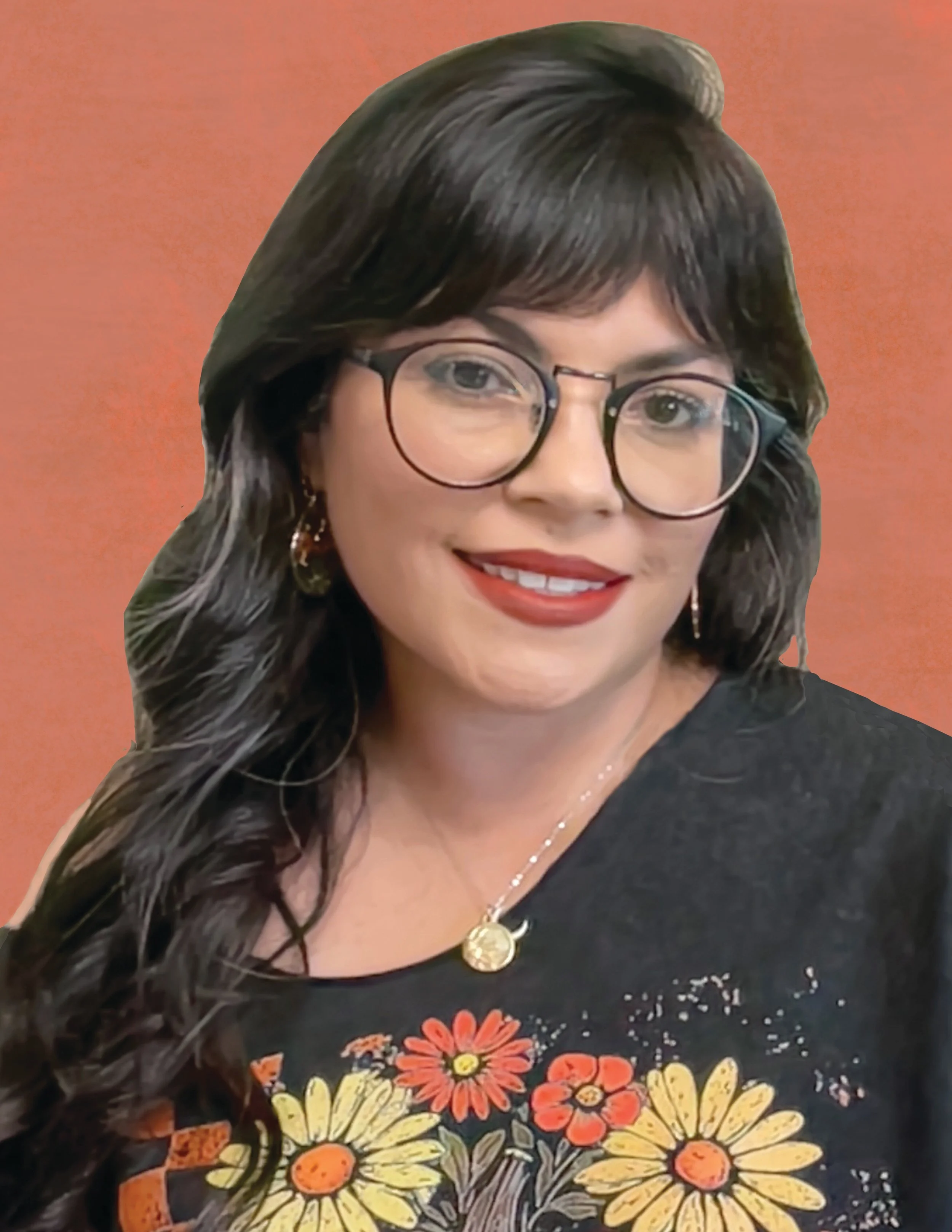
Cynthia De La Torre was born and raised in Southern California. She writes and illustrates cut-paper art picture books that teach kids about self-acceptance, finding their place in the world, and accepting other people’s differences. She loves all things weird, whimsical, and magical. You can find her at cynthiadelatorre.com.
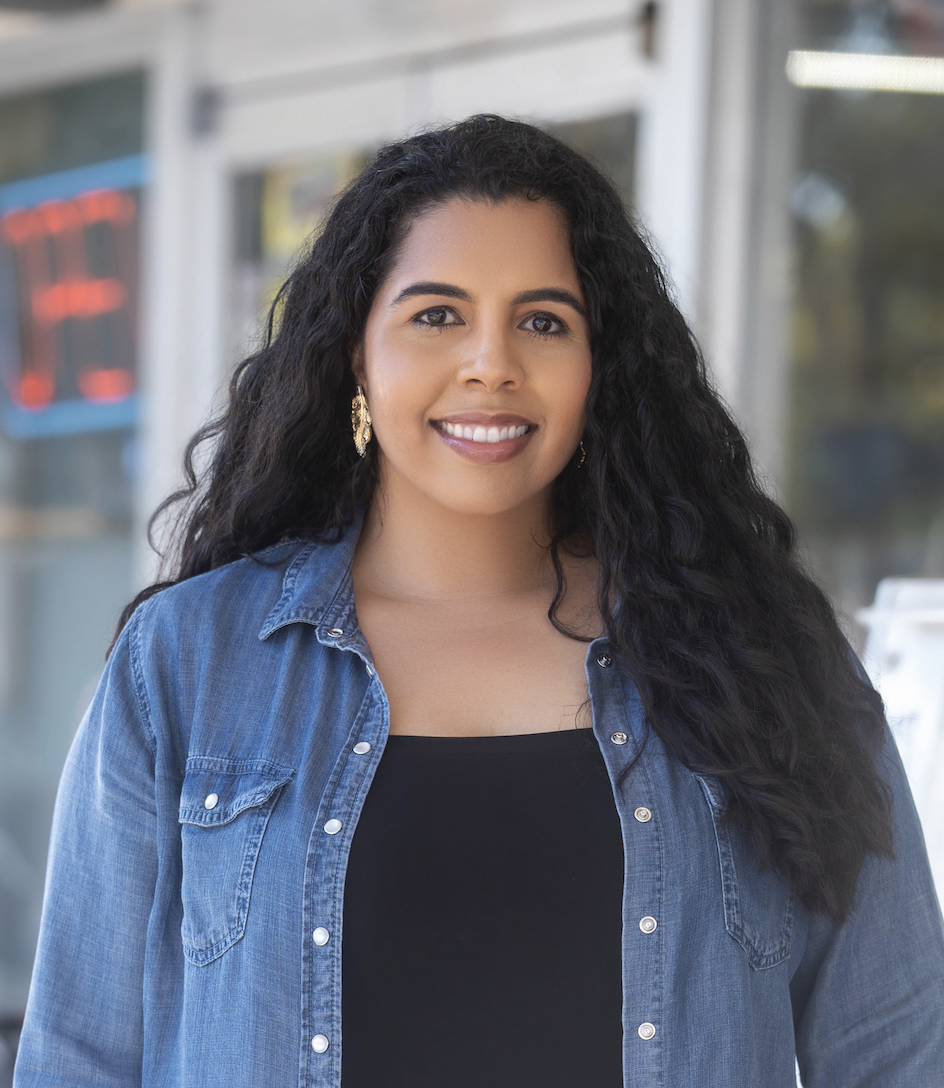
Amaris Castillo is an award-winning journalist and writer. Her debut book, Bodega Stories, will be published in September 2026 from the University Press of Florida. You can find her at amariscastillo.com.