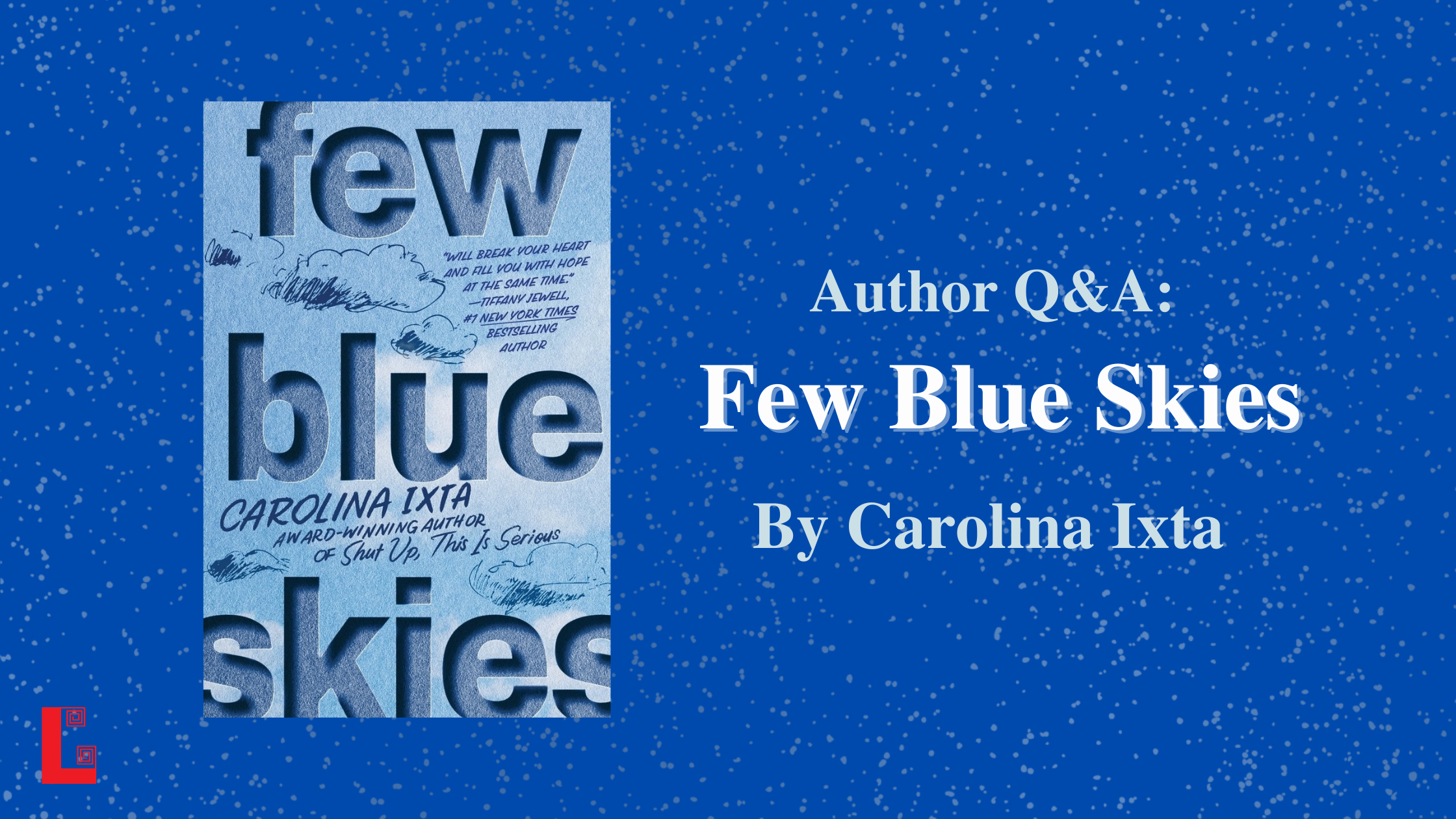
Carolina Ixta’s sophomore novel, Few Blue Skies, follows Paloma Vistamontes — a teenager who embarks on a fight against a major corporation dominating her town. San Fermín is changing drastically. Along its mountains, warehouses from Selva — a massive e-commerce conglomerate — are being built.
“It used to be so easy — a clear view of the earth around me,” Paloma narrates in the first chapter. “But after Selva moved in, everything turned gray. Especially the air we’re breathing.”
Paloma, still nursing a broken heart over her ex, Julio, decides she wants to research the health impacts Selva is having on its workers and the surrounding community. The stakes rise when she learns that the corporation is planning to open one of their warehouses beside her high school.
Few Blue Skies is a poignant YA novel about environmental injustice, morality, labor issues, and more. Ixta, an award-winning author from Oakland, was partly inspired by her time spent in the Inland Empire with her godmother, who lives in Riverside. But by her early 20s, Ixta noticed how much the area had changed. There were now all these gray buildings everywhere — logistic centers for retailers like Amazon and Target.
Ixta spoke with Latinx in Publishing about the extensive research she underwent to write Few Blue Skies, her character’s second chance romance, and much more.
This interview has been edited for clarity and brevity.
Amaris Castillo (AC): Can you tell us about the research you did about the warehouse industry while writing this book. What was the research like and what did you learn?
Carolina Ixta (CI): It was so intense, and perhaps the biggest part of writing it. One of my good friends, Alberto, is from the Inland Empire. When I was stuck on beginning to write, I called him and he was like, ‘What do you mean you’re stuck? Just call people.’ And I was like, ‘Well, I don’t know anyone.’ And he was like, ‘Let me do it.’ He put me in contact with someone, who put me in contact with someone — and eventually it led to 30 or 40 interviews with community members: parents, art activists, warehouse workers. I interviewed so many people because I wanted to get an almost kaleidoscopic understanding of the problem as someone who is not from there. There was a lot of privilege that I had to be able to talk to these people as almost a journalist, instead of someone who was down there living that experience.
I was also heavily on JSTOR. There’s a lot of red tape because I no longer have access to an academia email address. But anything that was free on JSTOR, I would download, print, put into a binder, read, and take copious notes on. I have a binder just full of research. I attended a conference with an environmental justice organization so that I could talk to people who led the movement against this warehouse construction by this high school. They wouldn’t answer my emails, so I was like, ‘I’m just gonna drive and I’m gonna find these people.’
When I think back on it now, it was so intense, but everyone was very open to speaking with me, which I feel so grateful for.
“So I hope people learn and I hope people feel seen at the same time. That’s the goal with all of my books: to have folks learn and have language they might not have had prior. ”
AC: Among the stressors of Paloma’s daily life is this great tension between her parents. Her mother wants to leave their town of San Fermín and be closer to her relatives, and her father is a Selva worker on strike. What message were you hoping to send in having this couple sit on the far ends of this issue?
CI: In some ways it was inspired by my own parental dynamic. My dad, when he was still in my life, was a delivery worker. I saw the wear and tear it had on his body. He broke his neck once and he shattered his rotator cuff twice. He had physical wear from doing that type of work. And it sounds like such simple work: you drop off the package but, over time, those people are subject to such barbaric treatment. My mom, to this day, is hyper vigilant when it comes to money and is very wise with a dollar and knows how to stretch a dollar. She taught me about money from a very young age, which I feel incredibly grateful for.
So I was thinking about a strike, and how I wanted a parental dynamic with a person who leads with her head, which is mom — and a person who leads with heart, which is dad. And how those two things, in a situation like this, are at strife. I think an easy thing would be to go, ‘Paloma’s dad is working for the greater good of the people.’ But what does that mean for Paloma’s mother? I had never seen that dynamic explored — that strikes are selfless in many ways because we’re all stopping work for a goal, but usually someone has to pick up the slack at home.
AC: I also want to take a moment to talk about this incredibly slow burn between Paloma and her ex, Julio Ramos. What role did you see their relationship playing in the book when you have all these very heavy issues?
CI: The first draft of the book was so heavy. There was no book I could really pick up to help me. I’m not saying I am the first. There are multiple different books that I picked up for different reasons: I picked up Esperanza Rising (by Pam Muñoz Ryan) for the strike. I picked up Ain’t Burned All the Bright by Jason Reynolds and Jason Griffin to talk about air quality. I couldn’t figure out the pacing of the book because of its undertaking. My friends were like, ‘If I were 17, I would not really care too much about a strike in the warehouse. I would care about what’s going to happen with these two young people. Are they going to date again?’ So I picked up the romance as lightness, to give the book levity. And as a hook, for kids to go, ‘Damn. This is a really terrible situation that these kids find themselves in. It seems like they’re both on the same page. Are they going to date again?’... I need kids to feel some type of lightness when they’re reading it. It’s like a good pause for the destruction and chaos happening around them.
AC: What do you hope people take away from Few Blue Skies?
CI: I hope people learn. I think that’s my discipline as an educator: I want people to learn as much as they possibly can about an experience that may be different from theirs. I recently listened to a really interesting interview with Rosalía where she talks about how great fiction blurs the line between yourself and the other. I would hope that this book blurs it, in the sense that it feels immediate. There are feelings that are ubiquitous through the book, which are loss, grief, love, desire and morality. And there’s the external piece, which might teach you about an experience that you haven’t experienced before, including the place and the destruction of the environment in the location.
So I hope people learn and I hope people feel seen at the same time. That’s the goal with all of my books: to have folks learn and have language they might not have had prior. But also to understand that, despite how different this book might be from their own experience, it’s still rooted in something that’s very familiar, which is love and grief and everything else.
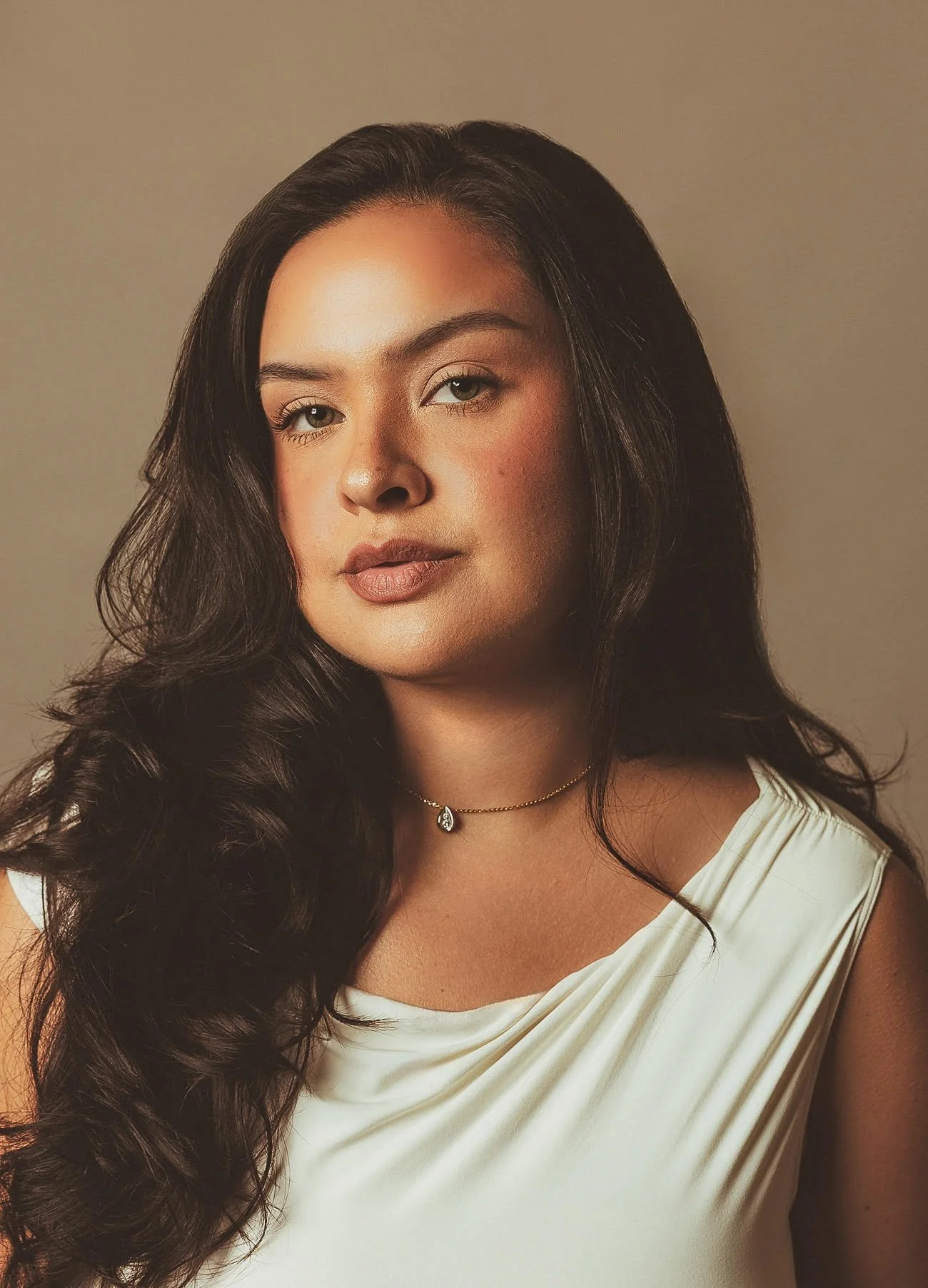
Carolina Ixta is a writer from Oakland, California. A daughter of Mexican immigrants, she received her BA in creative writing and Spanish language and literature at the University of California, Santa Cruz, and obtained her master's degree in education at the University of California, Berkeley. Her debut novel, Shut Up, This Is Serious, was a Morris Award finalist, an LA Times Book Prize finalist, and the winner of the Pura Belpré Award. Few Blue Skies is her sophomore novel.
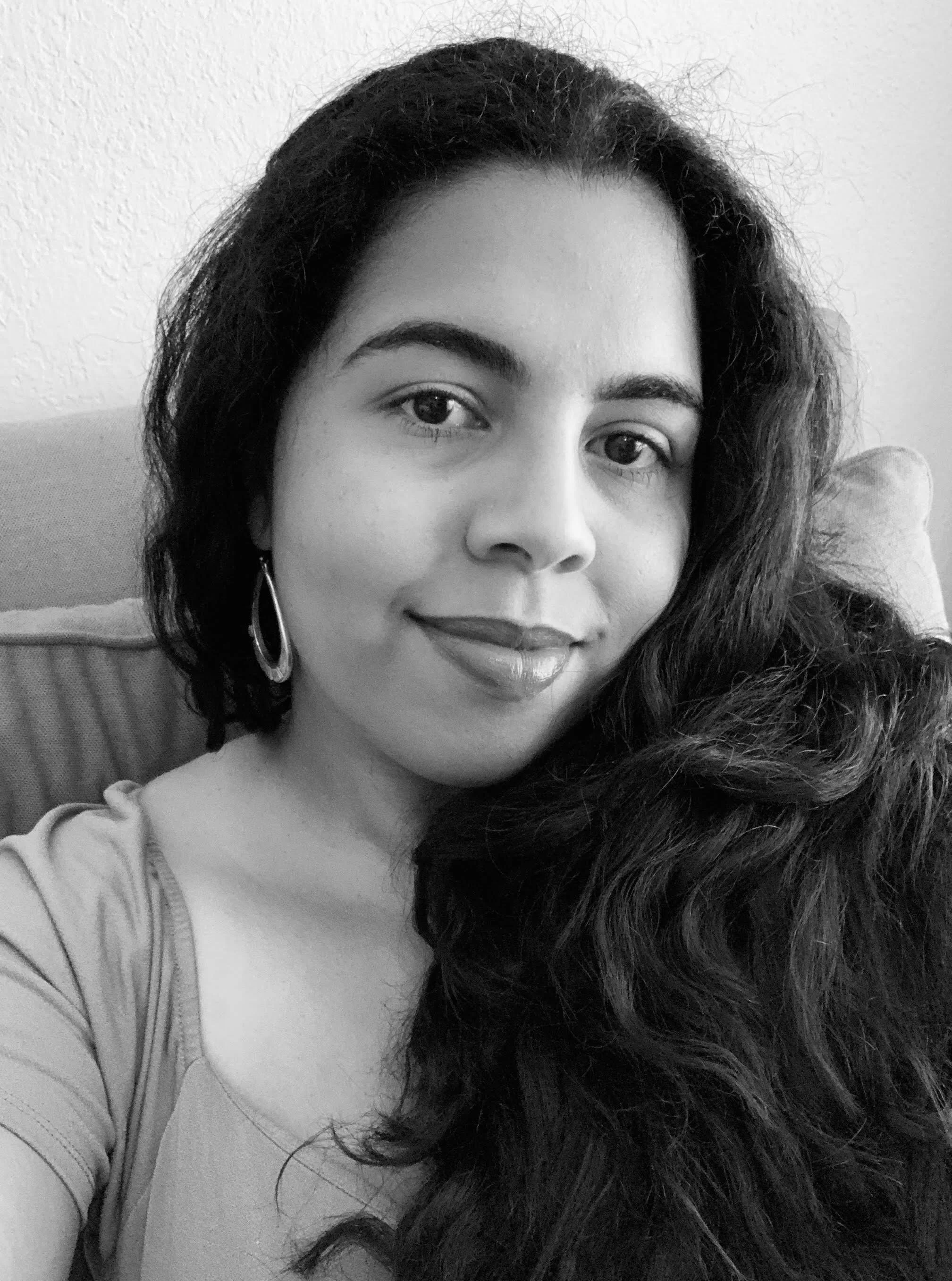
Amaris Castillo is an award-winning journalist and writer. Her debut book, Bodega Stories, will be published in September 2026 from the University Press of Florida.