Yvonne Tapia: Absolutely, and it relates to how all languages we speak are made up and passed down through generations, which is another theme of this series – generational knowledge.
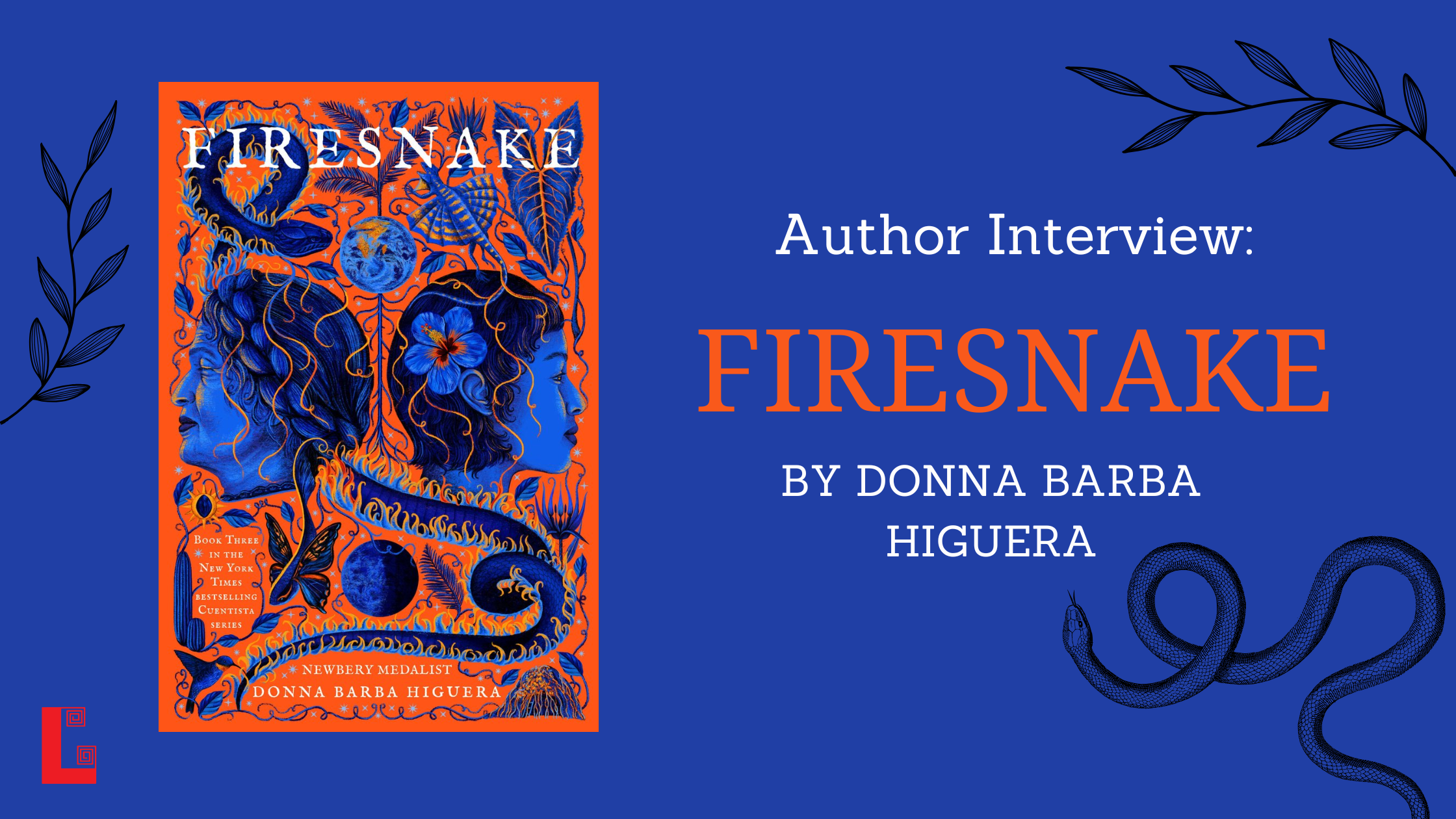
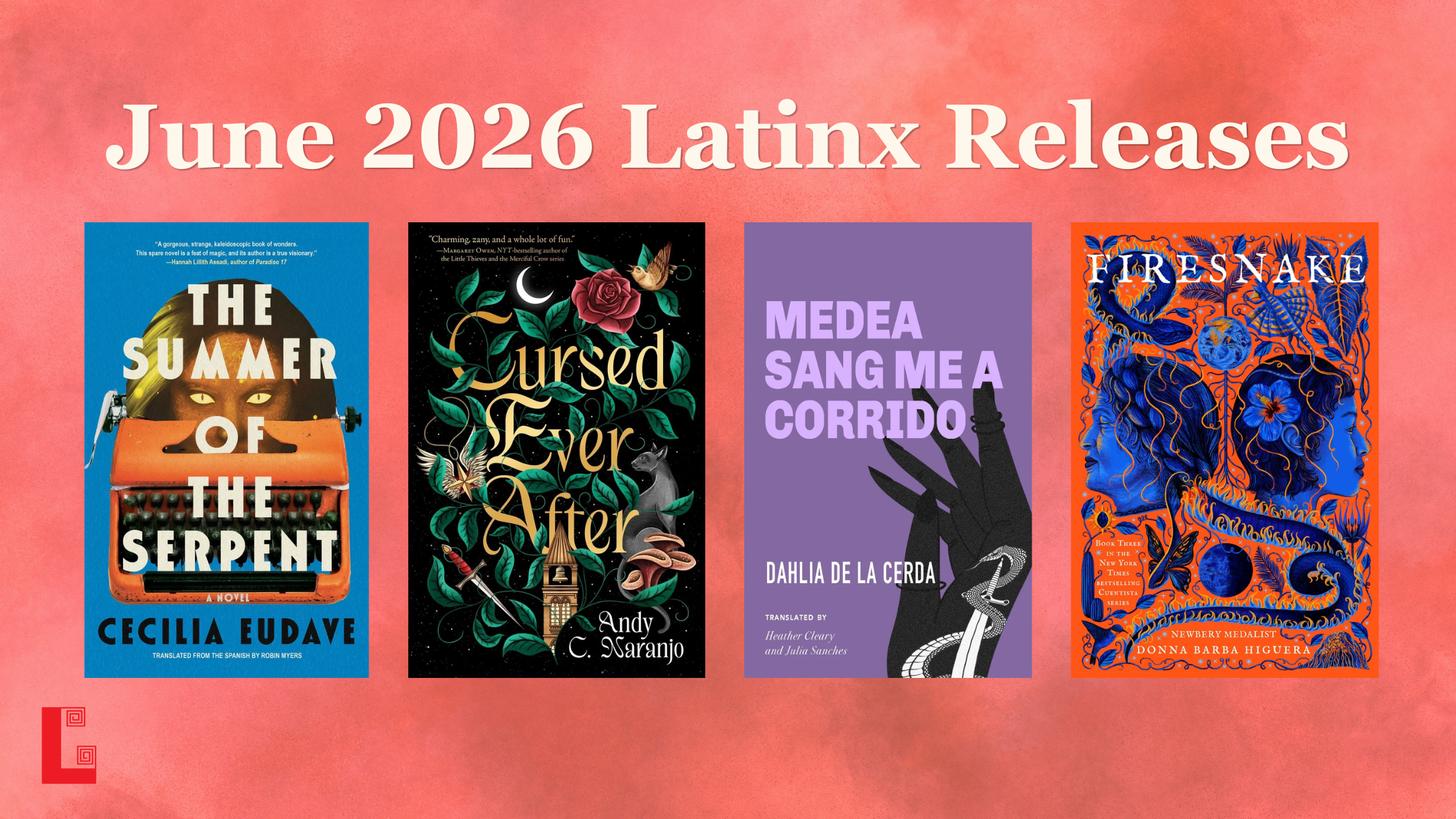
We also learn of a plot twist that has Itzel feeling a certain way about our beloved Cuentista Petra Peña. This highlights how good communication is key throughout our interactions, from family to friends and onto the next generation. What inspired you to give us that plot twist involving Itzel’s mother.
Donna Barba Higuera: I’ll try not to give away spoilers – when I wrote that, it was very difficult to write, because Petra is very beloved, people love that character. Having Firesnake’s main character, Itzel, who resents Petra in some ways, and I won’t go into why but eventually, I was like, “Okay, if I do this, there will be readers who have read the series who are immediately not going to like Itzel, because the readers will say, ‘oh, how can she not like Petra, how can she resent her?’’ So I had to figure out how to do it in a way that was true to Petra remaining to what she loved, and also Itzel loving something else equally and hopefully the reader will go, “Okay, I can understand both points of view and why that would happen.”
Then when the plot twist happens, you realize it’s even more complicated than what their motivations are since there are other things going on. When I initially started writing, it didn’t have that plot twist. Once I added that plot twist, I had to go back and rewrite other parts of the book. Once I opened that up, the entire story opened up; the middle of the book, the end of the book. All of that opened up and I had to be careful to reveal everything at the right time.
Yvonne Tapia: That goes hand-in-hand with how much it takes for authors to develop the story. I love that you mention this for our aspiring authors because it’s good exercise to know that sometimes you don’t know the whole story. I was really surprised as I read the first chapters, thinking, “No way, why Petra?”
Donna Barba Higuera: As you know, writers will typically turn in a synopsis. When I would give my editor a synopsis, I’d tell him, “Remember, this is probably not where the story is going to conclude.” It’s so helpful when editors trust you to [flourish] the story well. It’s also equally important for editors to give space for all the wild ideas writers have.
Yvonne Tapia: What inspired the creatures that you introduced to us in Firesnake?
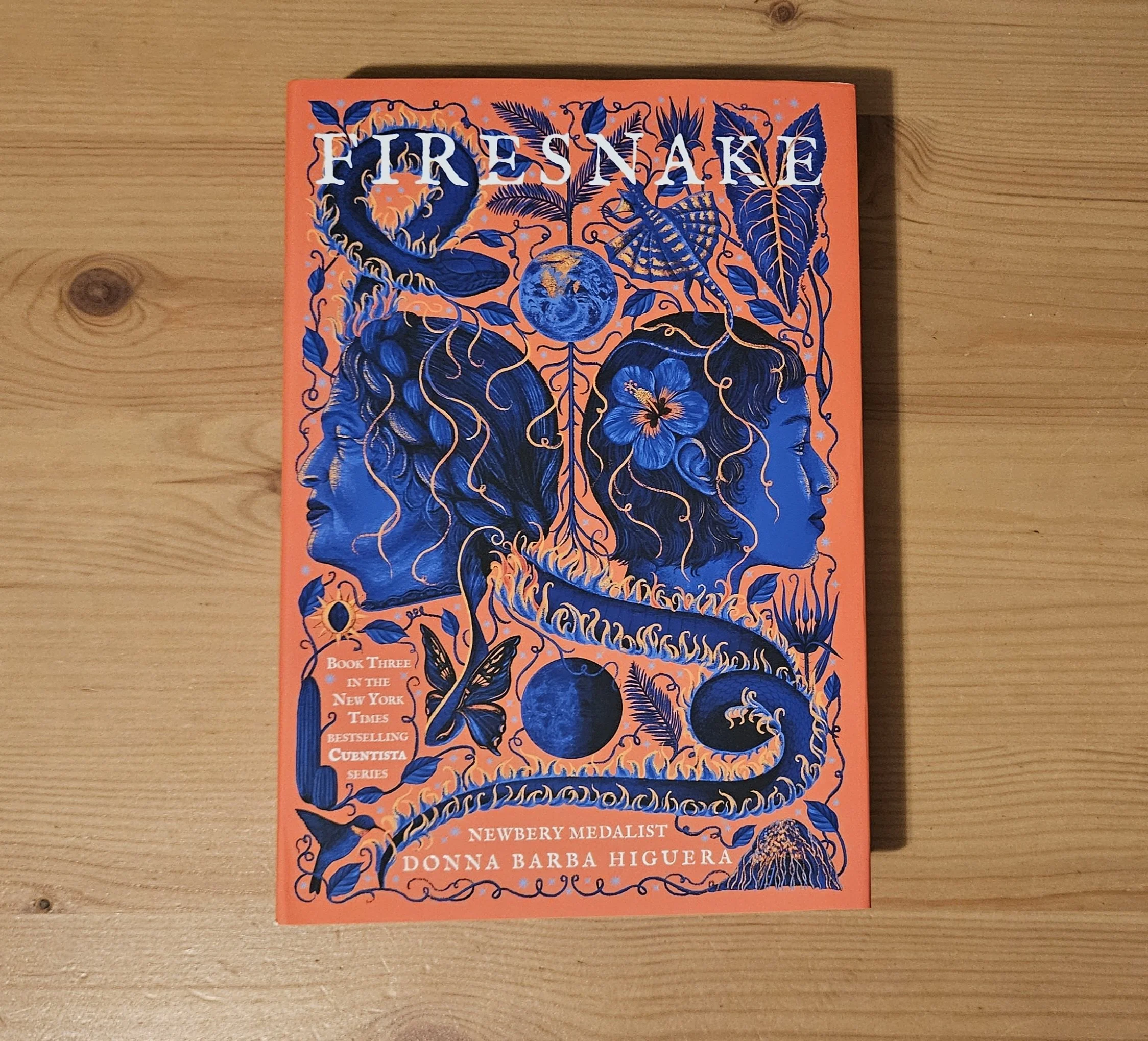
Donna Barba Higuera: In the first book of the series, The Last Cuentista, there were snapshots of the planet Sagan, where Petra saw a flower, a couple of creatures. Then, I thought, “Okay, what would she not have seen?” While I was writing Firesnake I got to explore that. Growing up in the desert, there was a concern for Gila monsters and other myths mentioned, and I got to turn them into something from another planet. I got to make things fly, have the imagination wander.
Yvonne Tapia: When you speak about concern, that also ties in to Alebrijes, where Leandro and Gabi, were under Tia Lula’s management and they find out that the only reason they were listening to her was because she instilled fear in them.
Donna Barba Higuera: Exactly. In Firesnake, the stories of why you couldn’t go to places because monsters could harm you were real. In Alebrijes, the characters were the ones who created stories of non-existent monsters and one needs to think about what the motivations are. A lot of it comes down to human nature. Through these books, you realize that the people that you want to be entirely good, sometimes fail. Sometimes the people who you once thought were evil, can do things to redeem themselves. I don’t ever let the reader be entirely comfortable with all the characters since they each have their own flaws. Because I think that oftentimes as a reader, we should be on guard.
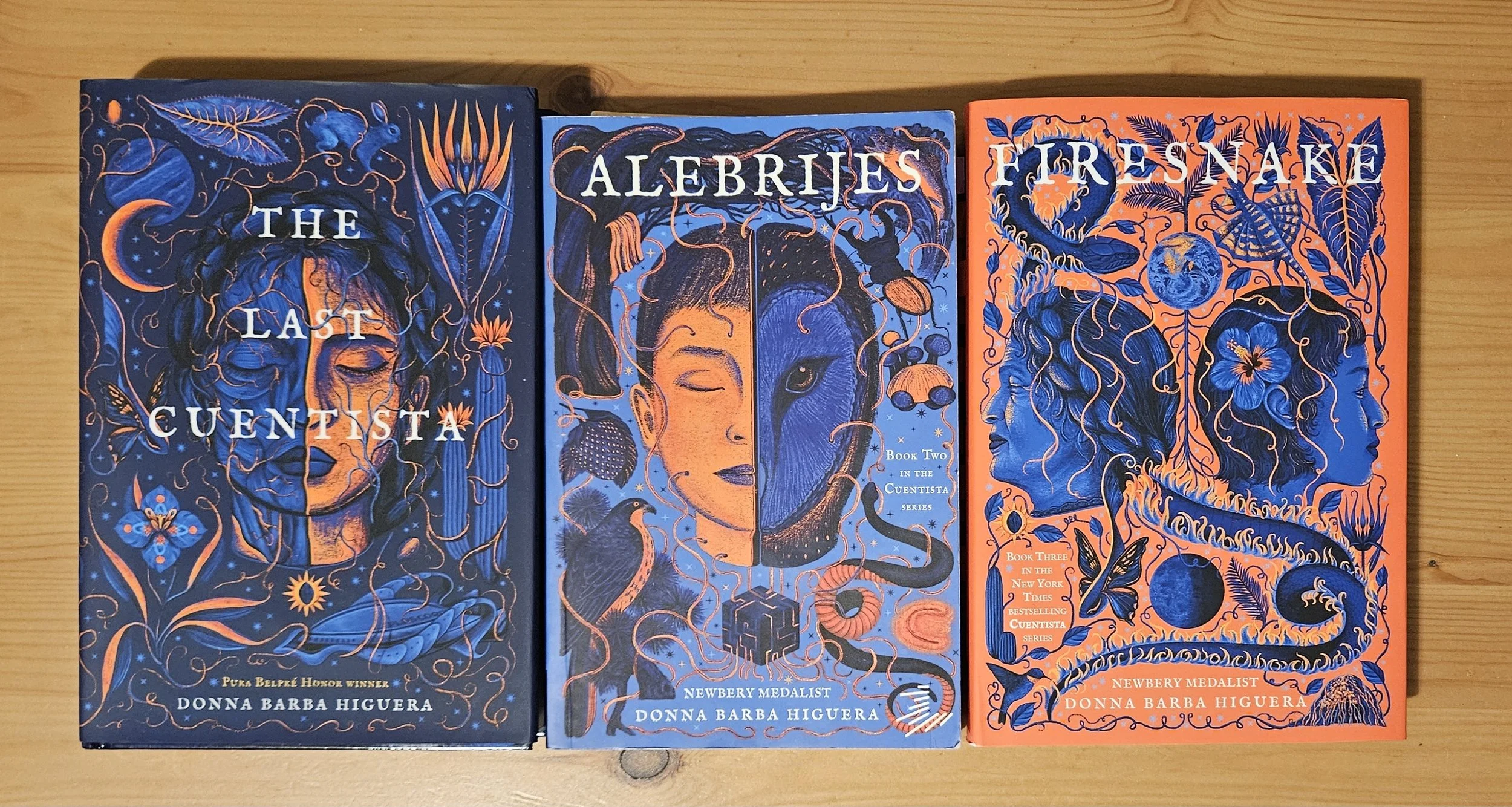
Yvonne Tapia: Very important. How did you decide to combine all the three books together, The Last Cuentista, Alebrijes, and Firesnake?
Donna Barba Higuera: It was actually hard, and when I wrote Alebrijes, I didn’t think that anyone would realize that it was the same planet Earth from The Last Cuentista. As I wrote Alebrijes I thought, “This is a standalone. People won’t realize that the post-apocalyptic world the Alebrijes characters are living in was from Haley’s comet in The Last Cuentista.” In Alebrijes, I never even say that it’s Earth until the very end of the story.
When I submitted the first draft, Nick asked, “What was the earth-ending disaster that caused the Alebrijes setting?” and I said, “Yeah but it’s not a series, it’s just a totally different character that’s in my imagination.” Then my editor said, “This is a series,” and when I got to the very end of Alebrijes, I said, “What if the people from Earth found a way to send a message to the people of Sagan to tell them that there were survivors on Earth?” So I did it, I wrote an epilogue that had me decide, “Okay well now I have to write a third book.”
Readers had the questions. Kids were the ones who inspired the third book because kids said, “I wanna know what happens afterwards, after they arrive on Sagan. What was the lifestyle like there?” In The Last Cuentista, there were a lot of chapters that got cut and they were focused on Sagan, so I got to go back and revisit them. But they were all written from Petra’s point-of-view, and Petra is not the main character of Firesnake, therefore I changed up the POV as well. The tone of each book is different because I wanted to give readers different perspectives.
Yvonne Tapia: You’ve highlighted a lot of generational storytelling and how important it is to keep customs, how did you incorporate Petra’s legacy into Itzel?
Donna Barba Higuera: That was so fun to do because I had to ask myself when I started writing this book; what parts of Petra’s storytelling would have survived on Sagan? What parts of her culture would’ve permeated? I wanted to show the power of storytelling and in creating new culture and a new way of thinking. It was a little selfish of me as a writer and I wanted to show how [Petra] who I really grew to love represented something for me. Even the people who weren’t from [Petra’s community], those in new settlements knew of Petra’s stories and the stories that she had created on the planet.
I’d like for readers to think, “Oh! Petra’s culture is on this planet” and then for readers to have it become real to them. I got to create a new planet with my heritage and I love that! That’s the really magical part about being a writer. When I do school visits, students see that they can [be authors as well]. They meet this person in real life and they think, “Oh! She’s a real person who wrote these stories. I can go do that too.” Therefore, it creates that for present and future generations that it is a possibility.
Yvonne Tapia: Beautifully said. Is there a generational custom you’d like to highlight?
Donna Barba Higuera: The time that we spend with our elders is important and the small things that are involved around that. For example, my grandmother and the time I spent with her, where she would just make us Mexican hot chocolate and tell us stories. It’s funny that at first, as a child, I thought it was just my family [that did that], and then to realize – no, this is part of a bigger culture, and these are bigger traditions.
So when I write about those things and then I see people’s reactions, both young and old, stating, “I had those moments with my grandparents too!“ or “I do that with my grandparents too!” and it’s very emotional for people. Those very small things that connect me with someone I love, and you realize that a lot of people have those same moments, and that is so powerful, and it connects us all together. It’s not always a parent, sometimes people just say, “I had that [parent figure] too!”
A lot of Mexican folklore can be weird and [it’s] good to highlight the lessons learned from them.
Yvonne Tapia: I also have that in my family! We bond over a chocolate drink, while learning from the elders. What do you hope readers take away from Firesnake?
Donna Barba Higuera: I thought a lot about the end of the book, and without giving too much, there’s so much that transpires from the very opening chapter of The Last Cuentista to the ending chapter of Firesnake. I was very deliberate about how I ended the book and what I ended it with. It begins with storytelling and it ends with storytelling. At first it began with fear and some hope, and now it is trepidation and also hope. While we may not have all the answers, there is still hope for something better. It was important for me to conclude that series that way.